


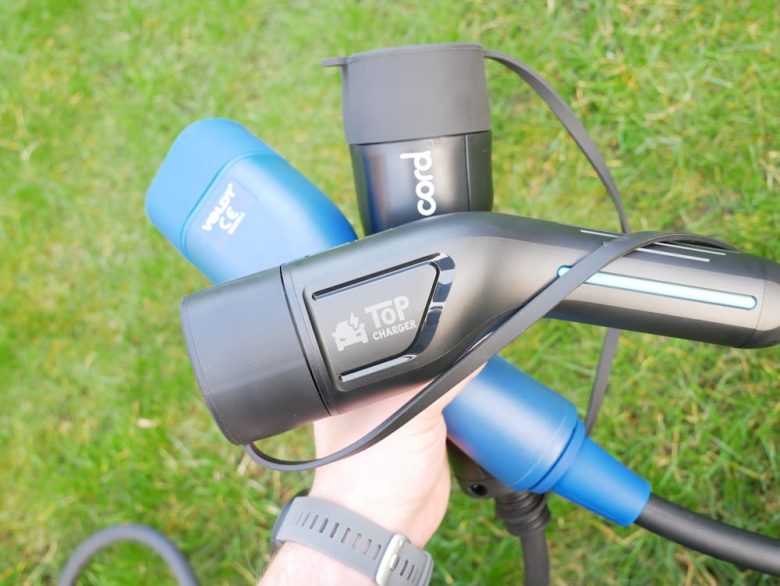
Either your EV came with a charging cable that’s too short or didn’t come with one at all. Or your old cable has reached the end of its life. Either way you can replace it with one of the high-quality options in this article.
A quick primer if you’re here and unfamiliar with what we mean by “Type 2”. A Type 2 charging cable connects your electric vehicle to a charging station. If the charging station is Type 2, such as an Ohme ePod or Easee One, then you need a Type 2 to Type 2 cable.
It’s best to have a Type 2 charging cable if you intend to charge at home or in public via an untethered charge station. An untethered charger is one without a cable attached, letting you attach your own cable, and therefore change the length of it, upgrade, and so on. The Ohme ePod and Easee One are popular untethered units.
A cable rated at 32A is best because on a single-phase home supply (which most homes have), 32A gives you charging speeds up to 7.4kW. On a three-phase supply, you can charge up to 22kW or 11kW in some cases. Every cable reviewed below is 32A.
I tested three Type 2 to Type 2 cables so you don’t have to
Cord, Voldt, and Top Charger. Each is a good pick.
The saying goes that you buy cheap, you buy twice, but occasionally you find a gem. I made the last part up. But it’s true for some products. Toilet roll, for instance. Nothing wrong with Aldi’s finest. With Type 2 charging cables, it’s a bit different, and you’re often better off putting up a bit more dosh for a better product.
Paying more for a Type 2 charging cable filters out the cheapest-made, absolutely rank-plastic cables that’ll look beaten up within a few weeks and (probably) stop working within a year. Extra in the kitty gives you a longer cable, too. It’s always nice to have more EV cable length because not all the spaces you park in will position you, or your charge port, perfectly.
A really, really simple recipe for picking the best Type 2 EV cable is to go more than 5 metres in length (7m or 10m) and ensure it’s 32A and 7kW single-phase, or 32A and 22KW three-phase depending on where you primarily charge. At home, a 7kW cable is absolutely fine. In public, at AC chargers, it’ll add up to 28 miles of range/hour or thereabouts, a 22kW cable will add around 70 when charging at the limit.
The appearance, feel, and overall heft of a cable also matters. Some of the cheap Amazon-type cables are miserable with shiny plastic. Who cares? The vain, of course, like me. It’s why I splurged £20 extra on a white polyester tee recently because it had a Swoosh on it. I like nice things. It extends to my car and the kit I use with it.
I’ve covered the Type 2 charging cables that are worth your while below. They’re listed without any favouritism. I will say that the Top Charger cable is our own product, and will also say that it’s a fantastic pick even with my most scrutinous eyes. But so is the Cord one, and Voldt one.
I’ll stop wasting your time now and get to the list.
ALMOST!
One more thing — Type 2 to Type 2 cables (sometimes called Mennekes or EVSE cables) are compatible with ALL electric cars, vans, and PHEVs on sale today in the UK and Europe. The ‘to Type 2‘ part means that the cable connects to a Type 2 charge point. This is not the same as a portable charger, which is a 3-pin jobby that connects to a standard socket. To clarify: Type 2 (your vehicle) connects TO a Type 2 charger. Phew. More on what a Type 2 cable is and how it works.
Enter, my best Type 2 charging cables list, with three choices. Note that all pricing is accurate as of March 2026. I could cram more in and have you scroll forever, but these ones offer quality and value. A photo of them together below (loads more photos below):
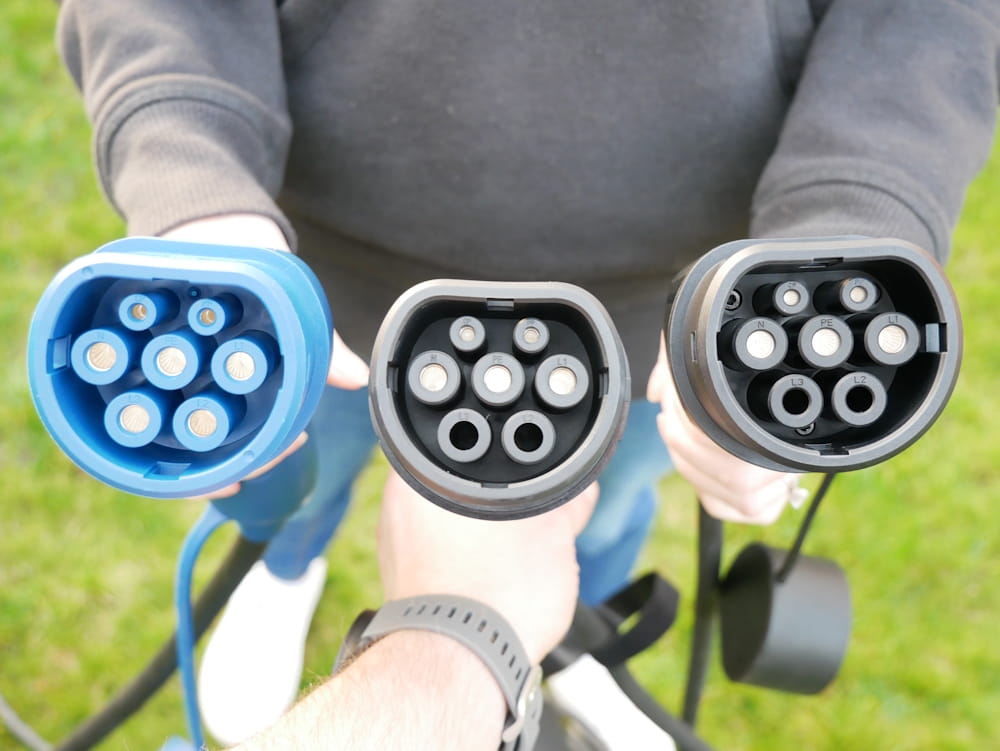
My pick of Type 2 cables from left to right: Voldt (left), Cord (middle), Top Charger (right).
Top Charger EV charging cable review: Type 2 to Type 2 Cable Bundle (7m, 32A, 7.2kW)
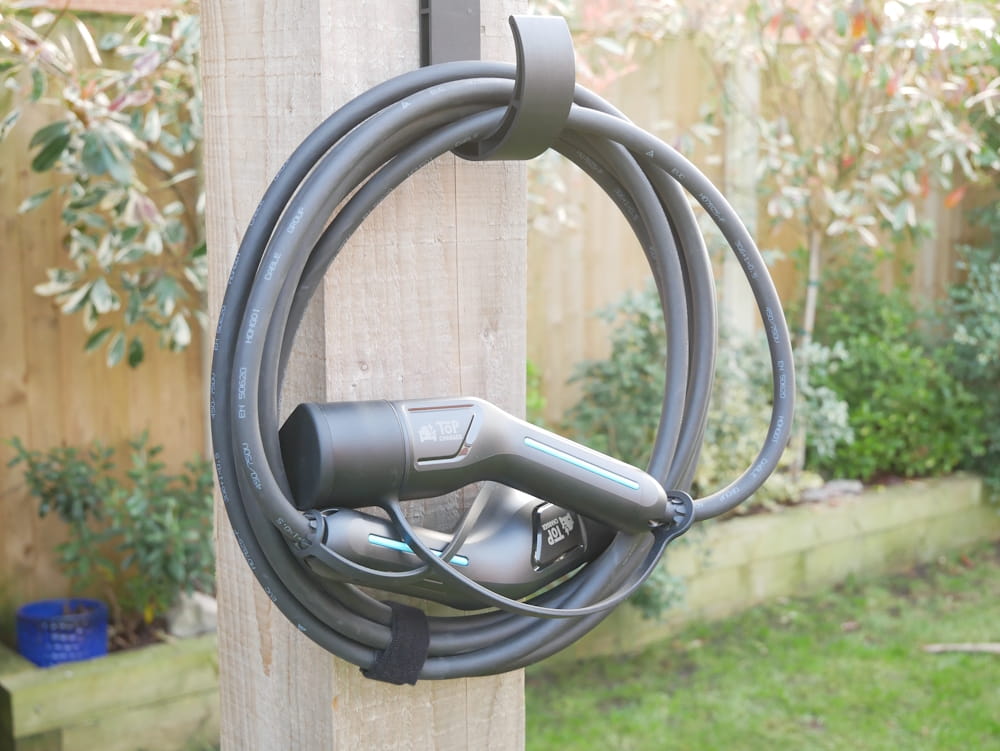
Price: £99.99 Rating: 7.2kW | 32A | Single phase Length: 7 metres Warranty: 3 years Certifications: UKCA, CE, TÜV, CB IP Rating: IP54 (IP55 when connected) IK Rating: IK10 Copper: Silver-coated, heavy gauge Cable material: TPU Connector material: PC and ABS
This is our cable. Bias declared. Moving on.
How does it feel
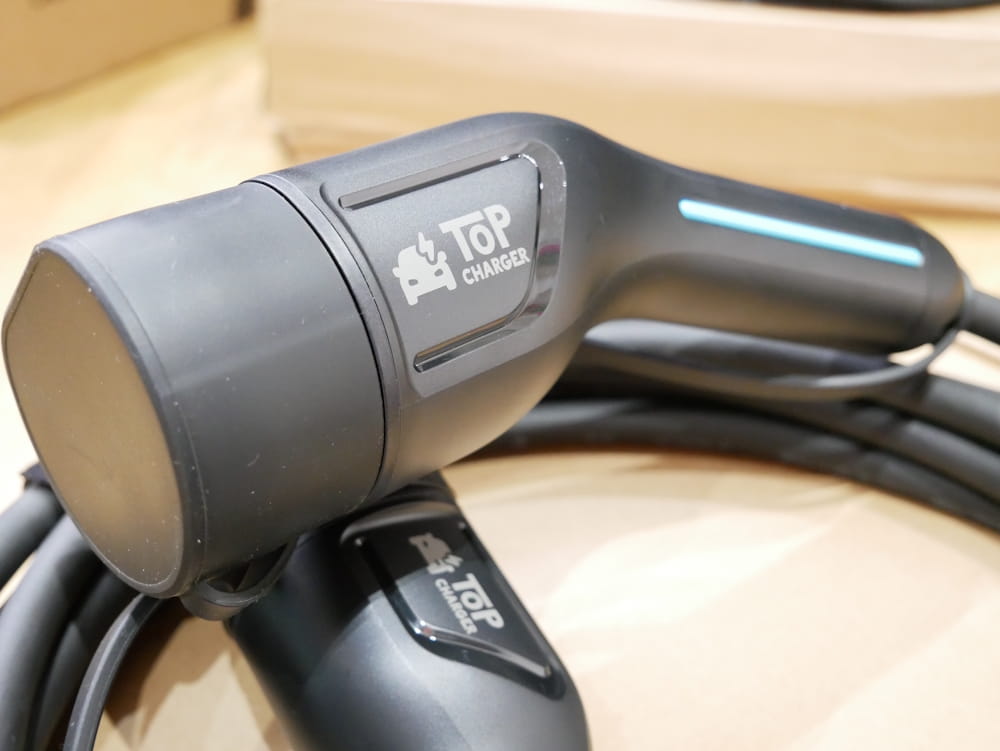
Of an extremely high quality. It’s the satin black plastic and matte synthetic rubber caps. It doesn’t catch the light like shiny plastic and feels suitably durable.
How much was it?
£99.99. Remember this is a 7m cable. For this quality, over £100 is the going rate.
Did it come with any extras?
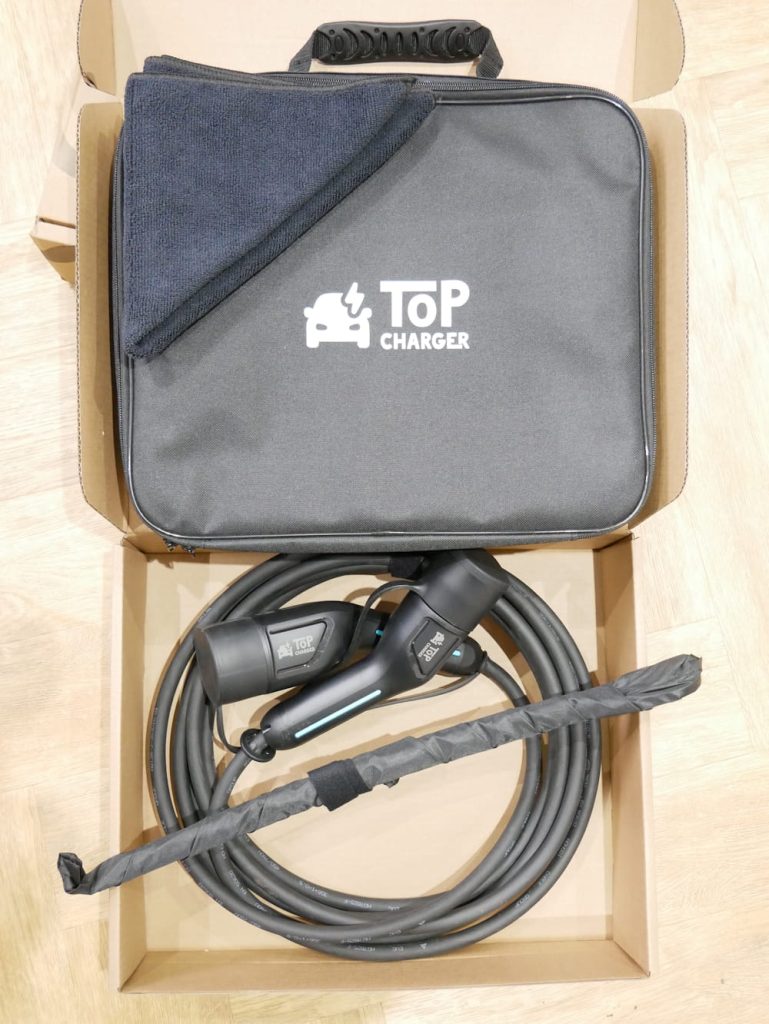
It came in a cardboard box and inside of that was the padded carry case. The cable was coiled inside the carry case with bubble wrap covering both heads. A black microfibre cloth is included and there’s also a magnetic charge port cover (that’s the stick looking thing in the photo below):
It’s 7 metres. 5 metres leaves you short if your charge port is on the wrong side or you’ve parked a bit off. 10 metres works but you’re lugging around cable you probably don’t need. 7 metres is the middle ground that suits most driveways and most public chargers.
The cable uses silver-coated copper conductors with a TPU sheath. Connector heads are PC and ABS. Satin black with a blue stripe. It looks like a cable that costs more than it does, which is the point.
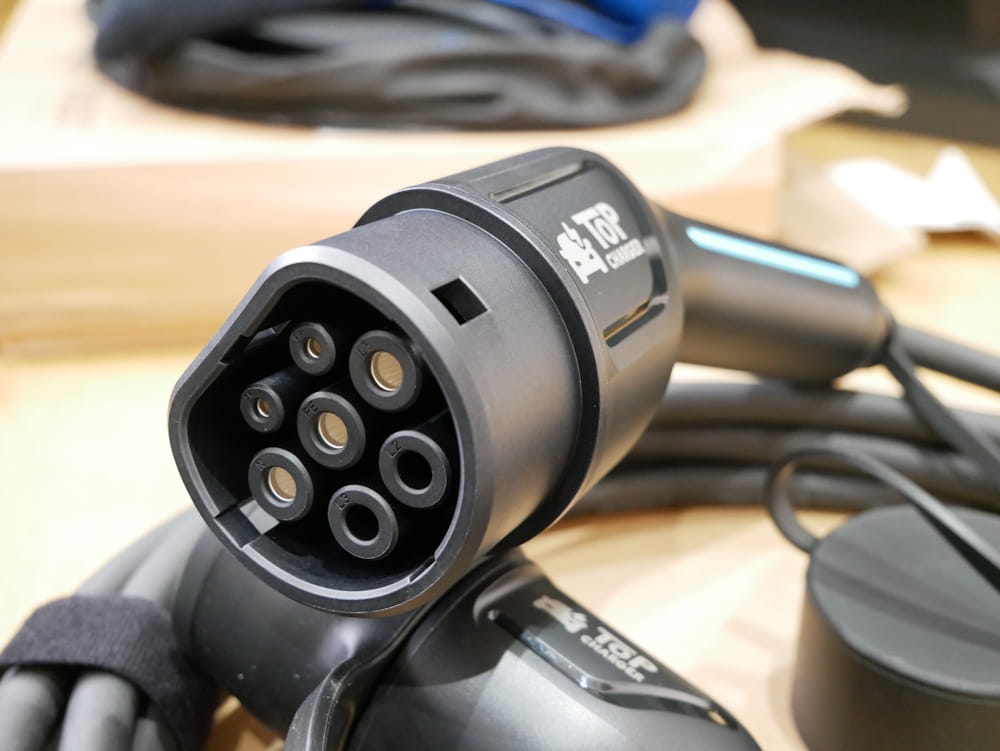
Certifications: UKCA, CE, TÜV, and CB. The TÜV one matters. It means the cable has been independently tested by a German safety body beyond the minimum requirements. Some cables on this list have it. Some don’t.
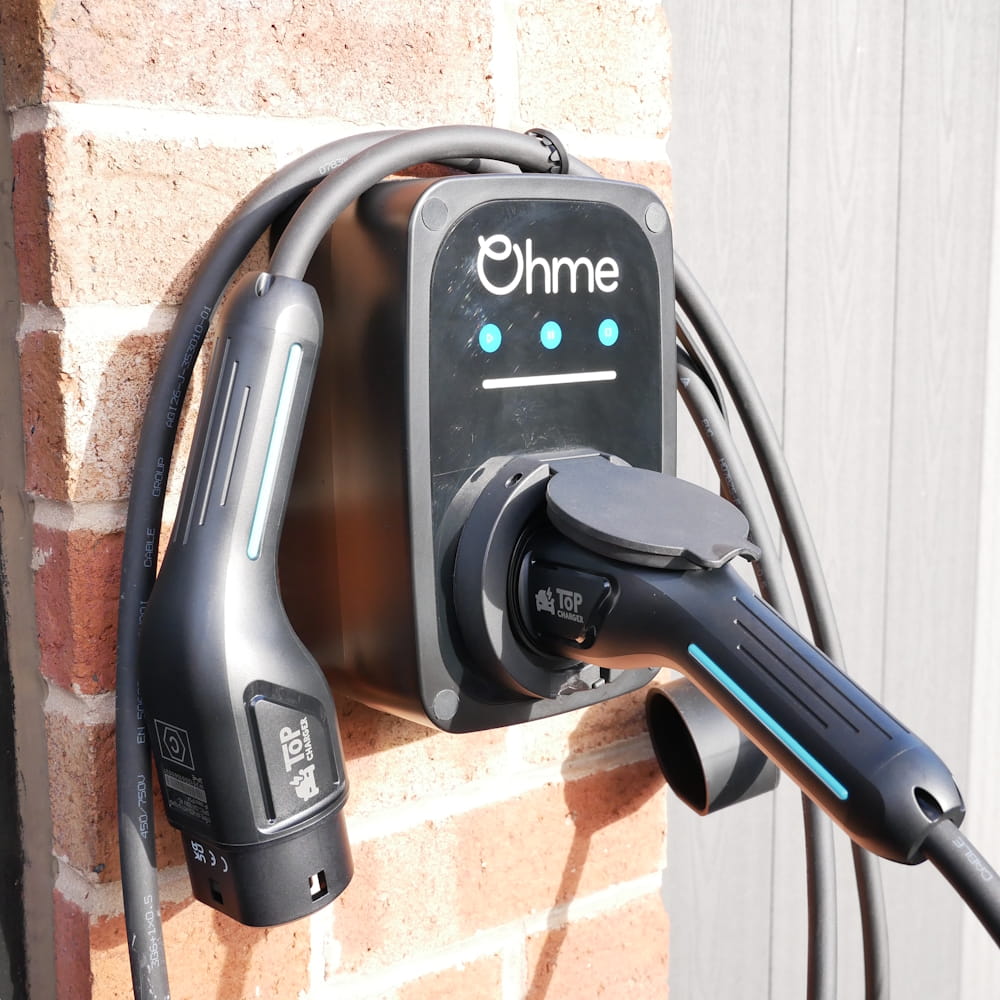
The reason this is listed as a bundle and not just a cable is because you get four things for £99.99: the cable, a padded carry bag, a magnetic charge port cover, and a microfibre cloth. The carry bag alone runs £10 to £15 from most other brands. The magnetic charge port cover is the bit most people haven’t seen before. It sticks over your open charge port while the cable is plugged in and keeps rain out. Simple idea. Surprisingly few companies do it:
Warranty is 3 years on the cable. If it breaks due to defects, it gets replaced and Top Charger covers the return postage.
Who it’s for: If you charge at home on a 7kW wallbox (most of the UK), this cable does everything you need. The 7m length covers the vast majority of setups, and the bundle means you’re not buying a bag and accessories separately a week later.
Where to look elsewhere: You can’t get it in 10m or longer. If you need 22kW three-phase for a workplace charger, the Voldt below is what you want.
You can buy Top Charger’s Type 2 charging cable here.
Cord EV charging cable review: Type 2 to Type 2 Cable (5m / 7.5m / 10m coiled / 15m, 32A, 7kW)
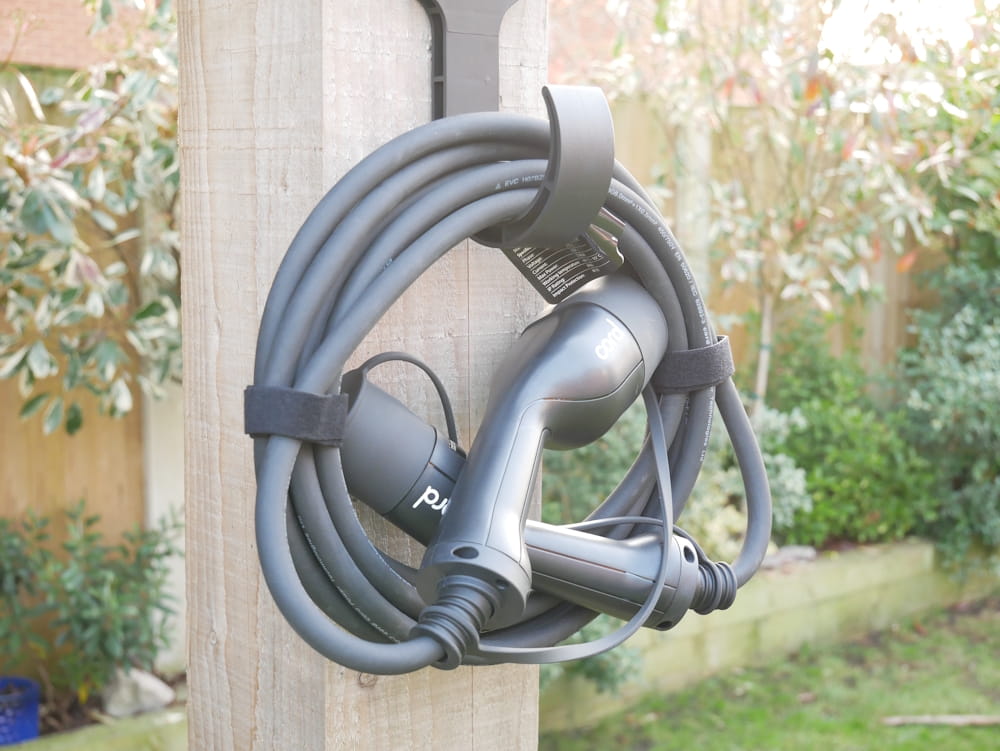
Price: £99 (5m) | £120 (7.5m) | £169 (10m coiled) | £185 (15m) Rating: 7.36kW | 32A | Single phase Lengths: 5m, 7.5m, 10m coiled, 15m, 20m, 30m Warranty: 3 years Certifications: CE, UKCA IP Rating: IP65 IK Rating: IK10 Working temperature: -40°C to +80°C
How does it feel?
Functional and good enough for the job but not as nice as either the Voldt or the Top Charger cables. The cable is slightly less flexible.
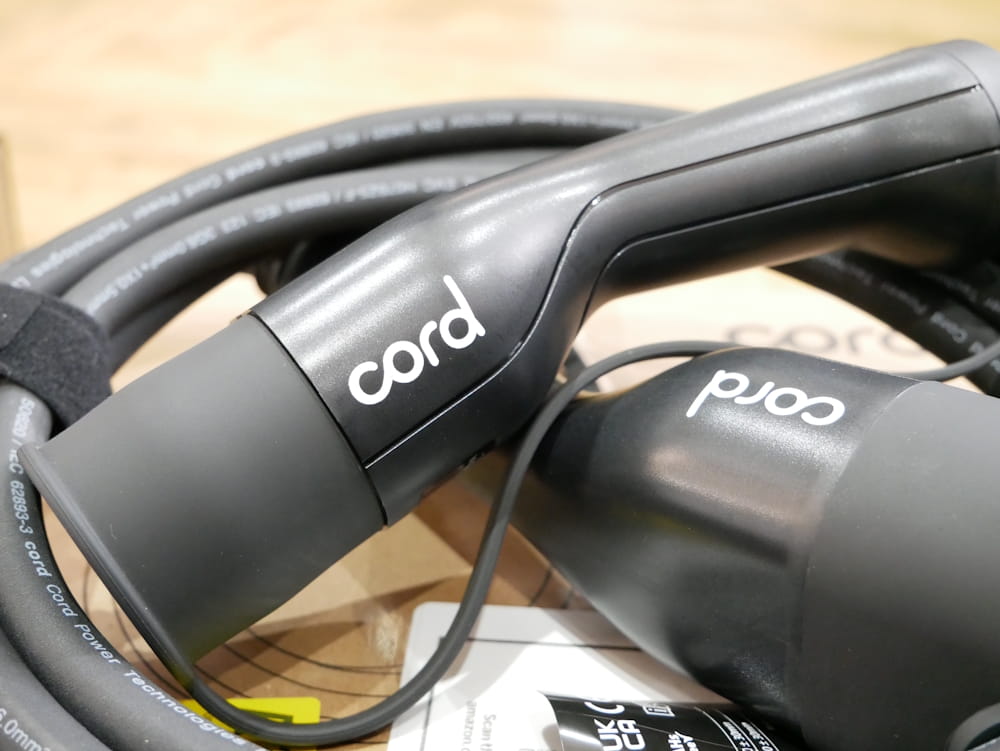
How much was it?
I purchased the 5m version, Cord’s cheapest cable. Cost me £99. That’s £7.99 less Top Charger’s cable, but Top Charger’s is 7m.
Did it come with any extras?
Only the cardboard box it came in and some product tags and a manual in a resealable plastic bag. Not the best first impression, have to be honest. The cable heads didn’t even have bubble wrap on them. However, the cable did arrive in perfect condition.
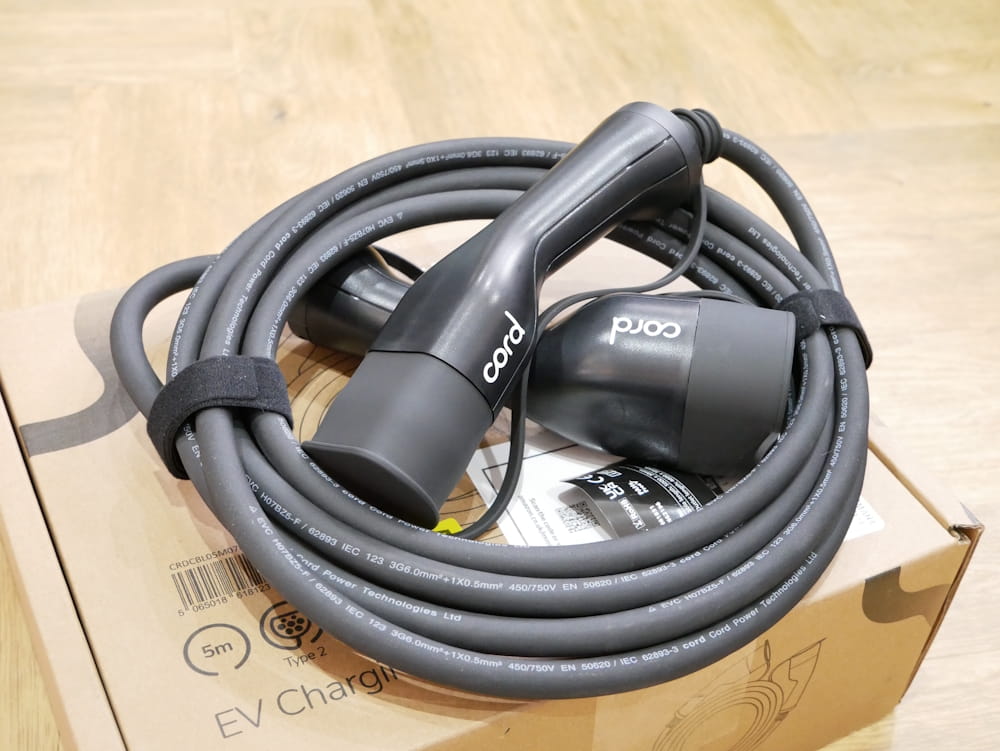
Cord EV is a Birmingham-based company that also makes home wallbox chargers (the Cord Zero and Cord One). They’re a Which? Trusted Trader, a Halfords partner, and sit at 4.7 on Trustpilot. They’ve been around since 2018 and clearly know their way around EV hardware. The cables are a newer part of the range.
The main thing Cord offers is length options. Six of them: 5m, 7.5m, 10m coiled, 15m, 20m, and 30m. If you’ve got a long driveway, a charger round the side of the house, or two cars on one charger, Cord probably has the length you need. That flexibility is the reason they’re on this list. Our EV charging cable length guide has a good breakdown of what to pick.
The specs are consistent across the range. Every length is 32A, 7.36kW, IP65 waterproof, and IK10 impact resistant. The IP65 rating protects against dust and water jets from any angle. If your cable lives outdoors permanently, that matters.
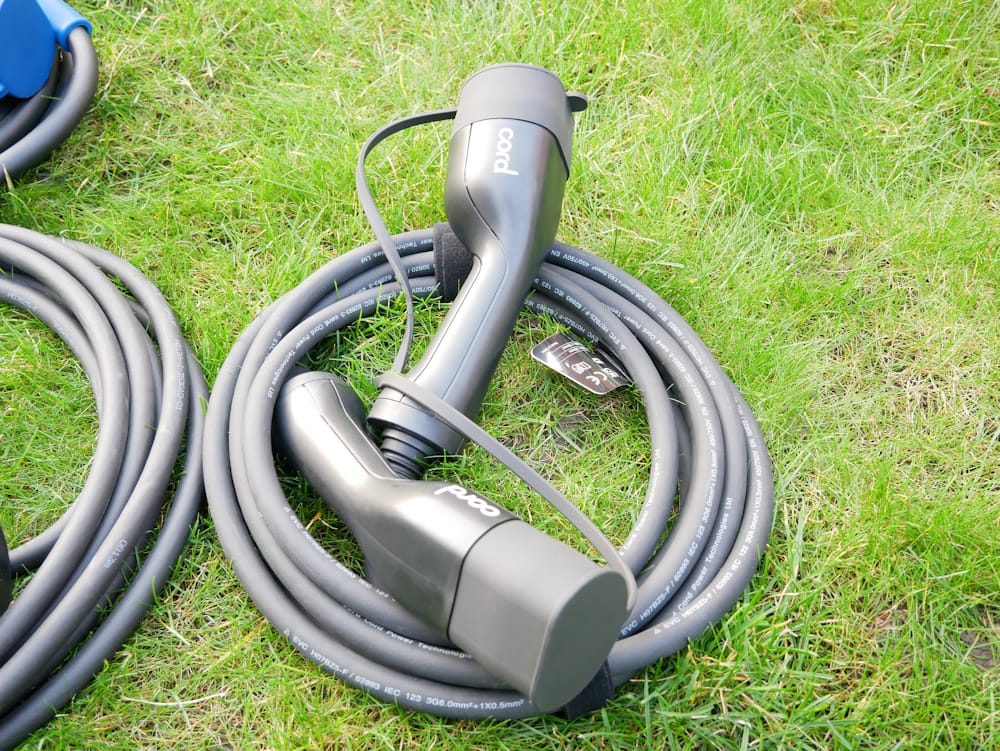
No extras are included. You get the cable and nothing else. No carry bag, no port cover, no cloth like you get with Top Charger. If you want a bag, that’s an extra purchase. Of course, you might be slinging the cable on a shelf or chucking it onto a wall mount anyway. So ignore if so.
Now, the pricing across lengths. This is worth paying attention to:
The 5m is £99. The 7.5m is £120, which is a 21% price increase for 50% more cable. That’s good value per extra metre. The 15m is £185, which is 54% more than the 7.5m for double the length. Still reasonable for what is a genuinely long cable.
The 10m coiled is £169. That’s 41% more than the 7.5m straight cable. The upside of a coiled cable is that it doesn’t sit on the ground in puddles and mud, and it’s easier to store. But if you just need length, the 15m straight at £185 is only £16 more and nearly double the cable.
The 15m cable has 23 verified reviews on Feefo and a 4.6/5 rating. That’s the most reviewed cable in Cord’s range by a wide margin, which tells you something about what length people actually go for when they want a long cable.
You can find out more about Cord’s Type 2 charging cable here.
Who it’s for: Drivers who need a long length that other brands don’t offer. The 15m is the standout. It’s one of the few cables on the market at that length from a reputable UK brand with a 3-year warranty. If your charging setup demands more than 7 or 10 metres, this is probably where you end up.
Where to look elsewhere: If 7 metres is enough, there are cheaper options on this list. If you need three-phase 22kW, Cord does sell those variants but the Voldt range below is purpose-built for it. And if certifications matter to you, note that Cord lists CE and UKCA but doesn’t mention TÜV or CB.
Voldt EV charging cable review: Type 2 to Type 2 Cable (2m to 40m, 32A, 22kW)
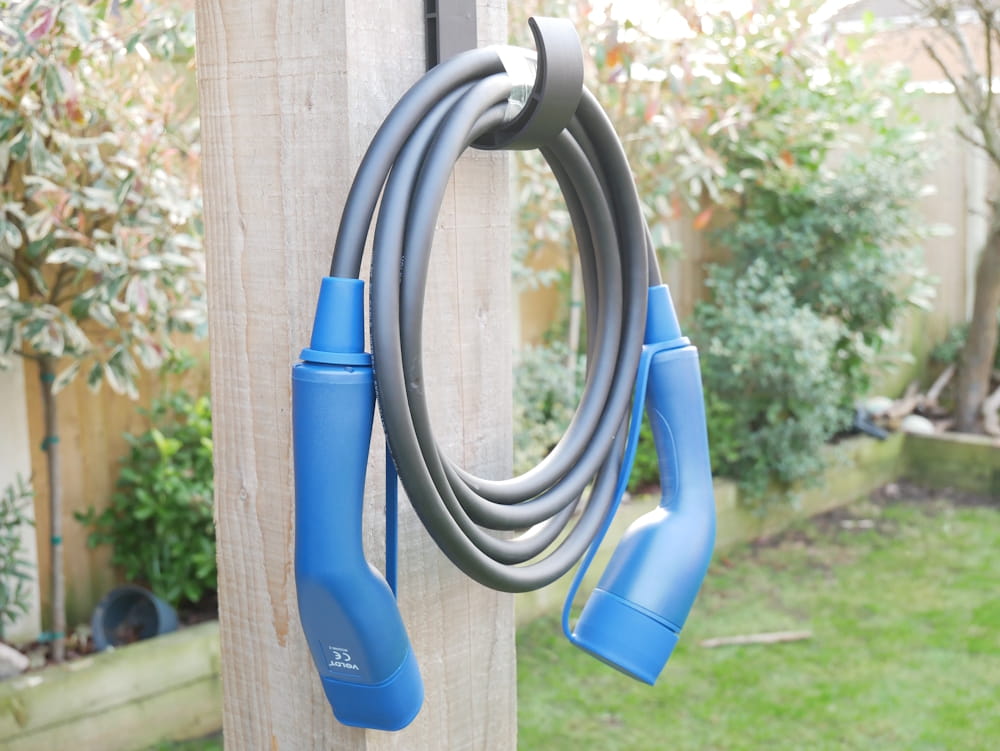
Price: From £109 (2m) Rating: 22kW | 32A | Three phase Lengths: 2m, 4m, 6m, 8m, 10m, 15m, 20m, 25m, 30m, 35m, 40m Warranty: 3 years Certifications: CE, UKCA, TÜV IP Rating: IP67 Working temperature: -30°C to +50°C Weight: 540g per metre Insertion cycles: 10,000+ Includes: Carry bag
How does it feel?
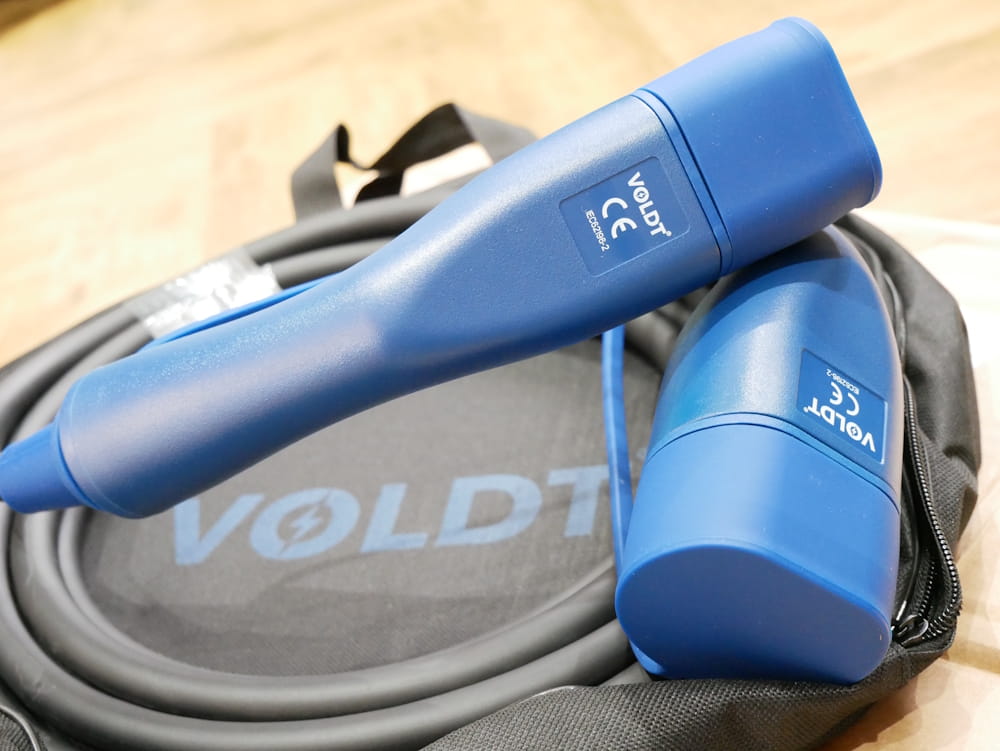
Durable. The blue plastic and Voldt logo are functional and work well. We picked the 22kW version because it’s a best-seller.
How much was it?
I paid £125 or thereabouts with delivery costs.
Did it come with any extras?
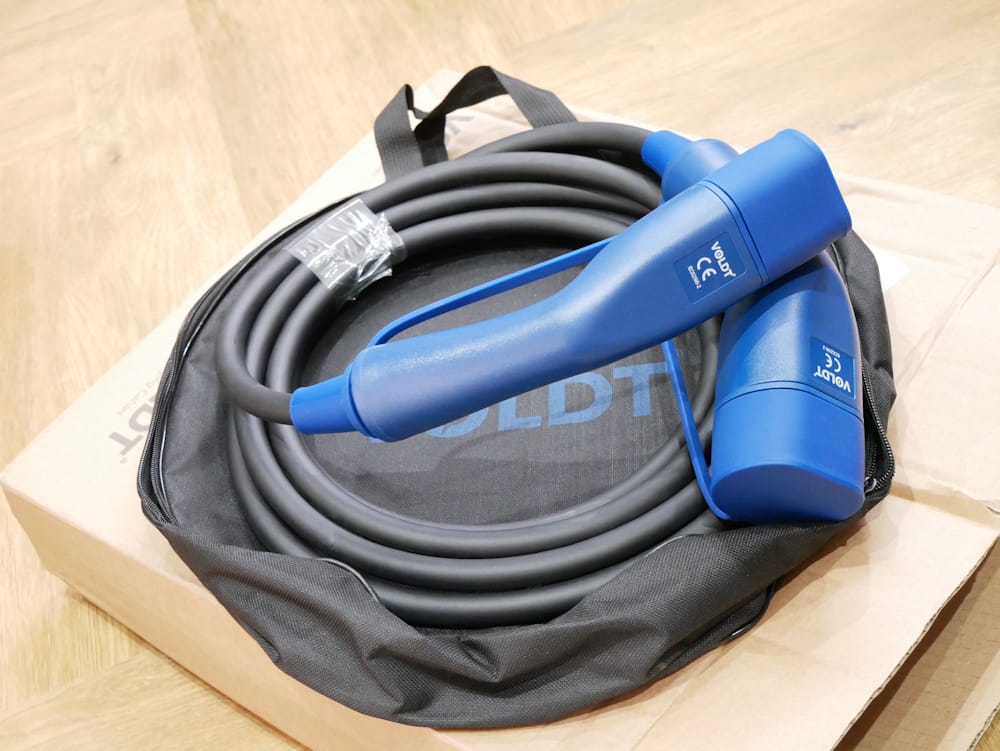
The Voldt Type 2 charging cable came in a cardboard box and the cable was coiled inside a carry bag with a handle. The carry bag is circular, with the Voldt logo, but no padding.
Voldt is a Dutch family business that claims over 100 years in the automotive electrical sector. They’re registered in London and ship from a European warehouse. They specialise in charging cables and nothing else. No wallboxes, no charger installations, just cables and accessories.
The range of lengths is the standout here. Eleven options from 2 metres to 40 metres. Nobody else on this list goes that short or that long. If you need a cable for an unusual setup, Voldt probably has the length.
The build is consistent. One-piece plug housings with no screws or glue, silver-plated copper contacts, and an IP67 rating. IP67 is the highest on this list. It means full dust protection and the cable can handle temporary submersion in water. If your cable regularly sits in standing water or heavy weather, that’s worth noting.

Voldt sells three Type 2 cables but the one to buy is the 22kW 32A three phase. It works on every charger type. At home on a single phase wallbox like the Easee One, it’ll charge at 7.4kW. At a workplace or public three-phase charger it’ll do the full 22kW. One cable, every scenario.
Voldt also sell an 11kW cable that’s cheaper and lighter at 300g per metre. Sounds tempting. Don’t. It’s 16A. On a single phase home charger, a 16A cable maxes out at 3.6kW. That’s half the speed of a 32A cable on the same charger. The price difference at 2m is £10. That’s £10 to avoid halving your home charging speed.
They also sell a 7.4kW single phase cable at £164 for 8m. The 22kW cable at the same length is £169. Five quid more for a cable that works on three-phase chargers too. There’s very little reason to buy the single phase version.
The 22kW cable has 201 reviews at 4.8 stars. One reviewer noted that at longer lengths it’s heavy when coiled up. At 540g per metre, a 20m cable weighs nearly 11kg. Fair point.
Returns are 100 days, which is over three times what most brands offer.
You can discover more about Voldt’s Type 2 charging cable here.
Who it’s for: Drivers who want one cable that handles home, workplace, and public charging without thinking about it. Also the pick if you need an unusual length that nobody else sells.
Where to look elsewhere: If you only need 7 metres, there are cheaper Type 2 charging cable on my list. If you need a long single-phase cable from a UK-based brand, Cord EV’s 15m or 20m are worth comparing.
So which one?
If you charge at home and 7 metres is enough, the Top Charger Type 2 charging cable bundle is the simplest option. Cable, bag, port cover, done.
If you need a longer cable in a specific length, Cord EV has the range. The 15m is their most popular for a reason. If you are replacing an older cable, here is how to tell when your Type 2 cable needs replacing.
If you want a cable that works on every charger type, single and three phase, or you need an unusual length, the Voldt 22kW 32A is the one. Skip the 11kW.
All three brands offer three-year warranties. All three sell 32A cables. You won’t regret buying any of them. You can shop the Top Charger cable here:
FAQs
What is a Type 2 charging cable?
A Type 2 charging cable connects your electric car to a Type 2 charging station. Type 2 is the standard connector for EVs and plug-in hybrids sold in the UK and Europe. If your home wallbox or a public AC charger has an open socket rather than a built-in cable, you need a Type 2 to Type 2 cable to link it to your car. The cable carries AC power from the charger to your vehicle’s onboard charger, which converts it to DC to charge the battery.
Can I use a Type 2 cable on any EV?
Yes. Every electric car, van, and plug-in hybrid on sale in the UK and Europe today uses a Type 2 charge port. A Type 2 to Type 2 cable is universal across all of them. It does not matter whether you drive a Tesla, BMW, Hyundai, MG, or anything else. The only thing that varies is how fast your car can accept a charge, which depends on your vehicle’s onboard charger, not the cable. As long as your cable is rated at 32A, it will not be the bottleneck.
What is the difference between Type 2 and Type 3 chargers?
Type 3 was an early European connector standard that lost out to Type 2. You will not find Type 3 chargers in the UK and they are effectively extinct across Europe too. Type 2 became the EU and UK standard and is now used on virtually every public AC charger and home wallbox. If you see “Type 3” mentioned anywhere, it is either outdated information or referring to a legacy installation in southern Europe. I would not give it a second thought.
Are Type 2 and CCS the same?
No, but they are related. Type 2 is an AC connector. It is the port on your car and the plug on AC charging cables and wallboxes. CCS, or Combined Charging System, uses the Type 2 shape on top and adds two extra DC pins on the bottom. CCS is what rapid chargers at motorway services use to deliver DC power at 50kW and above. Your car has one port that accepts both: the top half takes a Type 2 plug for slower AC charging, and the full port takes a CCS plug for rapid DC charging. You do not need a CCS cable. Rapid chargers always have their own cable attached.
