


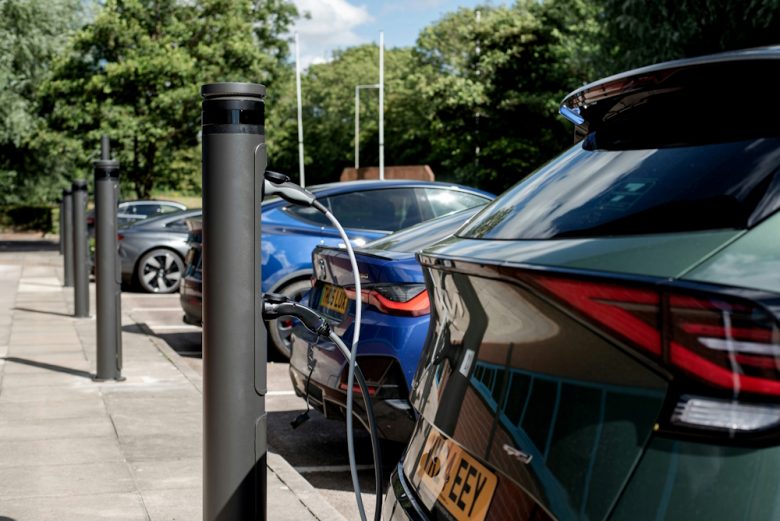


The UK registered its two millionth battery electric car in April, while the wider new car market grew 24% year on year to 149,247 units. It was the strongest April since 2019.
Figures from the Society of Motor Manufacturers and Traders show growth across private, fleet, and business buyers. Fleets led the way, up 26.8% to 90,462 cars.
Some context is needed. April 2025 was unusually weak because buyers brought forward purchases to March, dodging new vehicle tax rules including VED and the Expensive Car Supplement on BEVs.
That distortion makes this year’s comparison flattering, but the underlying recovery still looks solid. Private retail sales rose 20.2% to 56,116, while business registrations grew 15% to 2,669.
BEVs outpace the wider market
Battery electric registrations jumped 59.1% to 39,084, taking 26.2% of the market in April. Plug-in hybrids rose 46.4% to 20,597, and traditional hybrids climbed 18.8% to 19,711.
Together, electrified models made up 53.2% of new cars registered. That is the second month this year electrified powertrains have crossed the halfway mark.
Petrol still leads with 63,541 registrations and a 42.6% share, though that share is shrinking. Diesel slipped 1% to 6,314 units, just 4.2% of the market.
Mandate gap remains wide
The two million BEV total covers every battery electric car registered in the UK since 2002. Reaching it required heavy manufacturer discounting and last year’s Electric Car Grant.
Even with that support, BEVs account for 23.1% of registrations year to date. The Zero Emission Vehicle Mandate requires 33% this year, leaving a gap the industry is struggling to close.
The SMMT has revised its 2026 outlook accordingly. Total registrations are now forecast at 2.093 million, up from January’s 2.048 million projection.
BEV share for the year has been cut from 28.5% to 26.8%. The 2027 forecast sits at 2.121 million sales with 32% BEV share, around six points below the mandate target.
What this means for charging
The installed base of EVs keeps growing, and that matters for anyone building or running charging infrastructure. Two million cars is a substantial customer pool for public networks, workplace installers, and home charge point suppliers.
But growth is slower than the mandate assumed, which raises questions about charger rollout timelines. If government accepts industry calls for a transition review, funding mechanisms and grid upgrade priorities could shift.
Cost of living pressures are also part of the picture. Energy prices, interest rates, and recent Iran-related fuel volatility are all weighing on household decisions about whether to switch.
The Ford Puma topped April’s bestseller list, followed by the Kia Sportage and Nissan Qashqai. Chinese brands continued their push, with Omoda 5 in sixth place and Jaecoo 7 in tenth.
Two million BEVs is a decent number, but the pace is now the live debate. The charging sector has a clear runway, provided policy and infrastructure investment keep step with actual demand rather than projections set years ago.
Source: SMMT
