A Type 2 charging cable connects your electric vehicle to a power outlet be that a Type 2 socket via a wallbox like the Ohme ePod or a 3-pin socket.
We add the word ‘to’ after ‘Type 2’ to designate what the cable connects to. For instance:
- Type 2 to Type 2
- Type 2 to Commando
- Type 2 to 3-pin
From this explainer, it’s easy enough to gather that Commando, 3-pin, and Type 2 after the words ‘to’ are your charging sources.
Whichever Type 2 charging cable matches how you intend to charge, it is always the female end of the cable that is the first ‘Type 2’ in the name. The female end connects to your car, which in turn, connects the cable to your source:
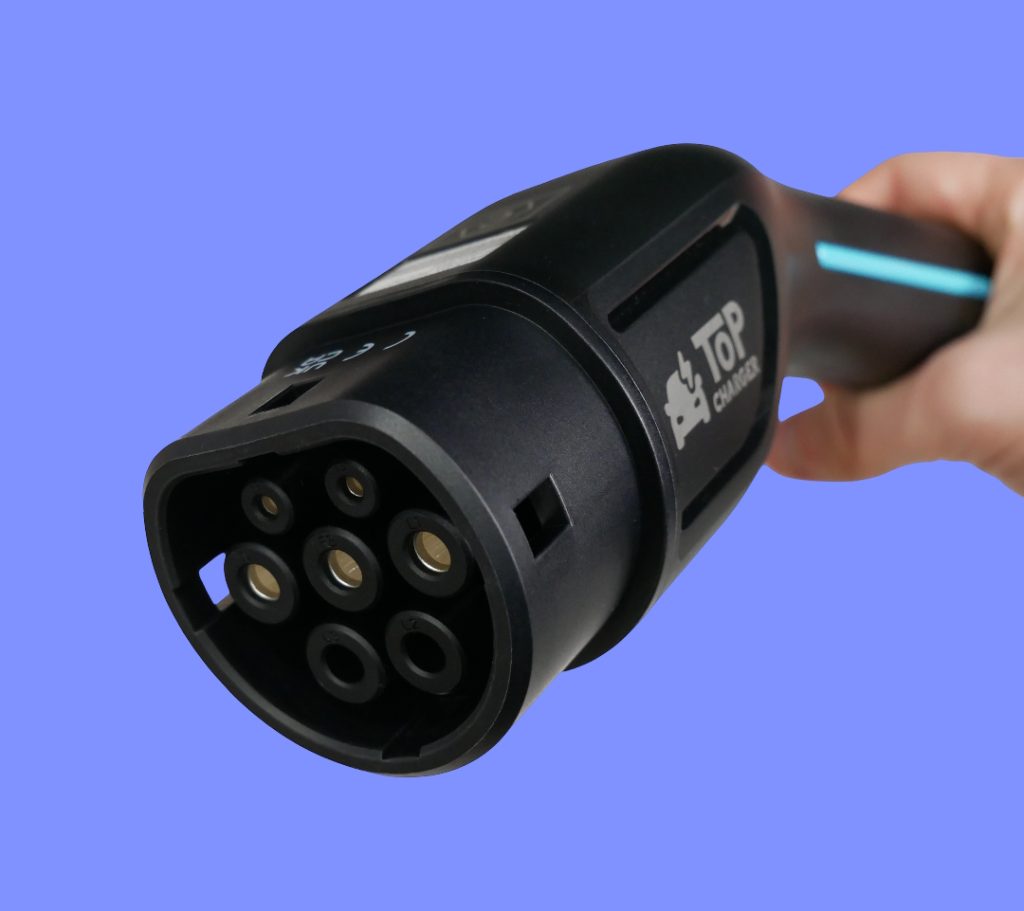
All EVs and PHEVs sold in the UK today and since 2014 have a Type 2 connector. That’s the basic compatibility to remember, that any Type 2 cable will plug into your Type 2 electric vehicle and charge it.
However, ‘Type 2’ does not designate the power transfer capabilities of the cable. It is merely the connector Type for your vehicle. The power capabilities of a cable have separate ratings, as follows:
- kW, the power your cable can carry (max). Such as 7kW.
- Amps (A). The current your cable can carry to deliver power. Such as 32A or 16A.
A 7kW cable needs to be rated at 32A to deliver that power. A cable rated at only 16A can only manage about 3.7kW. We see 16A cables mainly in 3-pin portable chargers and PHEV specials, rather than in a Type 2 charging cable for EVs.
So, when buying a cable, we need to make sure the amp rating supports the kW we need, or if cables are sold as “7kW” then the amp rating is already sorted, just pick the kW you need.
That’s what you need to know upfront. We’ll now provide more colour.
The inner workings of the Type 2 connector
Slightly mundane but let’s be thorough and start here since Type 2 charging cables are built to handle large power transfer safely. It’s interesting how they do it.
The illustration below shows the connector layout for Type 2 EV cables at the female end, the bit that connects to your EV or PHEV:
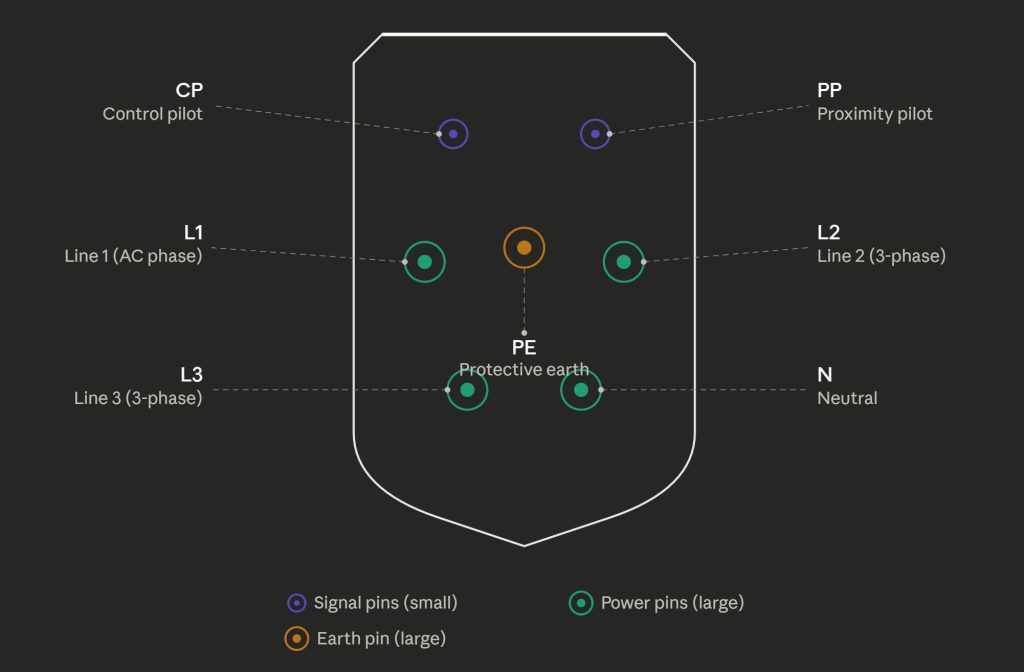
The two small pins at the top handle communication. CP (control pilot) manages the handshake between car and chargepoint, negotiating the charging rate. PP (proximity pilot) detects whether the plug is fully seated and tells the car not to drive off while connected.
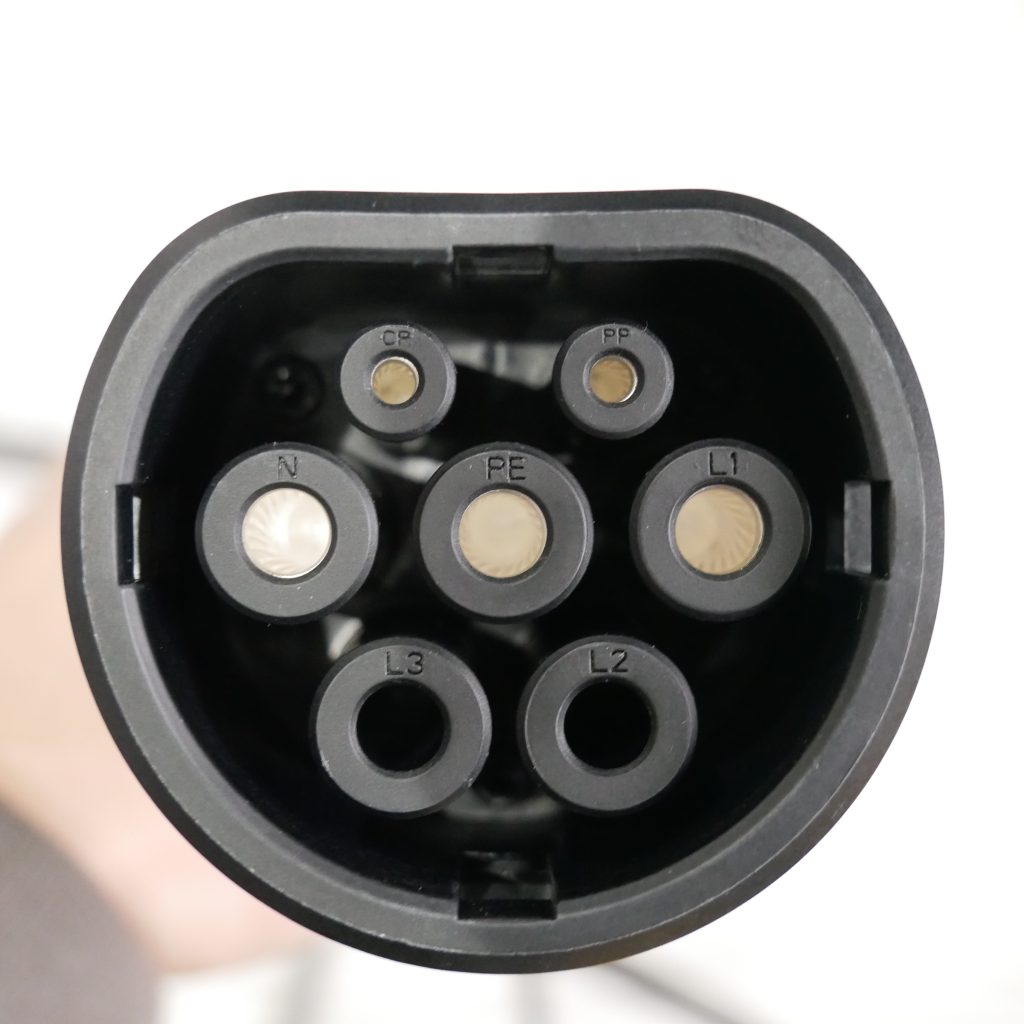
The five larger pins handle power and earth. On a single-phase home supply, only L1, N, and PE are active. L2 and L3 come into play on a three-phase supply, which is how the connector scales from around 7kW up to 22kW or beyond without changing the physical plug shape.
Ultimately the Type 2 connector handles power transfer safely at rates as high as 22kW because the handling of power is split across pins. A 3-pin plug, for example, has three pins, the Type 2 connector has several more.
Where you’re going to charge matters most when picking a Type 2 charging cable for your electric vehicle
Where you’re going to charge matters more than anything when deciding between Type 2 cables. Let’s consider the factors as a driver:
- Your available power outlet at home. Is it a wallbox, Commando socket, or 3-pin plug? You can get Type 2 EV cables for all three.
- Where you charge in public. If it’s at a single-phase charger any cable up to 7kW will do, or if it’s at a three-phase charger, a 22kW cable is best.
- The distance you park from your charge point. Absolutely crucial to your cable length decision. Most cars come with a 3-5m cable. Both are too short to be frank. You need a 6-8m cable to cover 99% of parking scenarios. Go over 10m, and you can lose efficiency in charging, plus the cable will be very heavy (over 5kg). There’s a balance to be had, basically.
The video below shows a Type 2 charging cable being plugged into a Type 2 wallbox:
Your car’s onboard charger sets the ceiling
Every EV and PHEV has an onboard charger that converts AC power from the cable into DC power for the battery. This onboard charger has a maximum rate.
22kW cable plugged into a 22kW chargepoint still only delivers 7kW if your car’s onboard charger maxes out at 7kW. The cable and the chargepoint are ready, but the car is not. So before spending more on a higher rated cable, check what your car can actually accept.
This works the other way too. If your car accepts 22kW on AC but you only charge at home on a single-phase 7kW wallbox, you will only ever see 7kW. The car is ready, but the supply is not. The slowest link in the chain always wins.
Tethered vs untethered chargepoints
A tethered chargepoint has a cable permanently attached. You pull it off the unit and plug into your car. An untethered chargepoint has a Type 2 socket and nothing else. You bring your own cable.
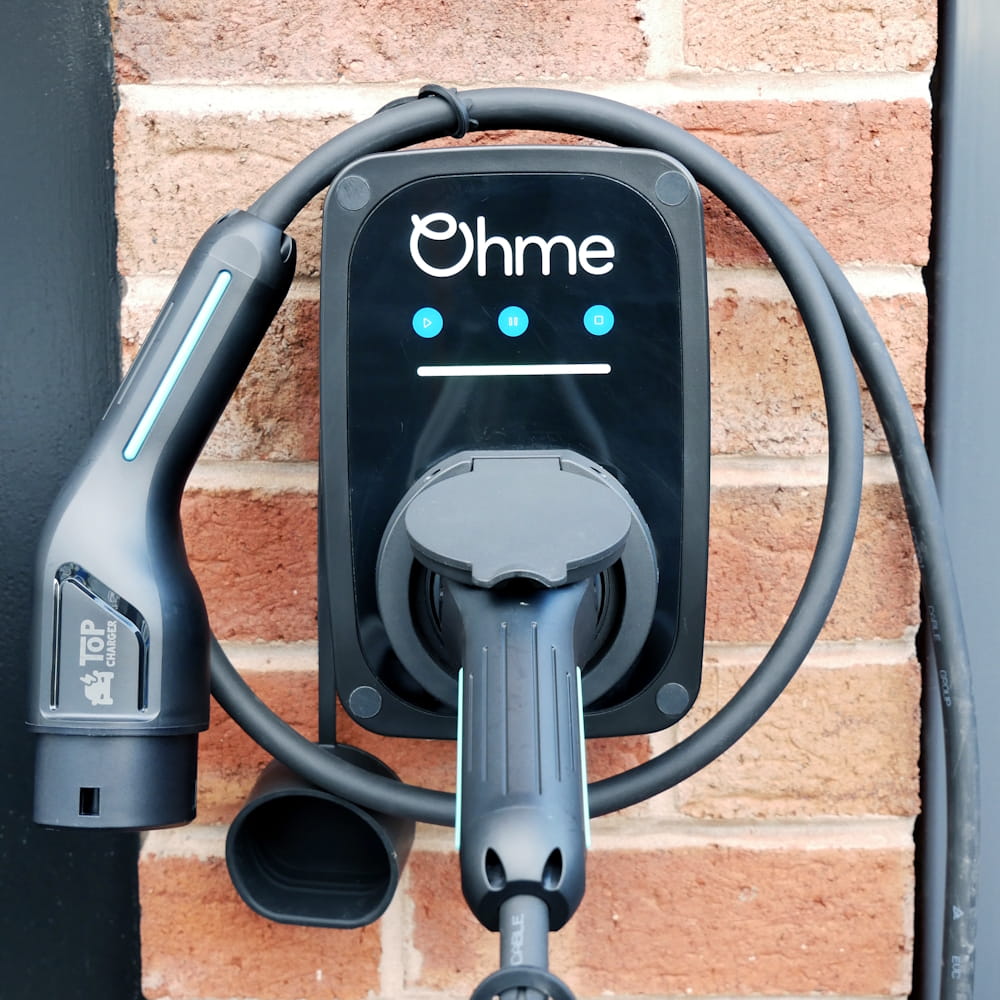
At home, tethered is the more convenient option. No unpacking, no coiling, no storage. You just grab and plug in. Most popular home chargepoints like the Ohme ePod offer a tethered version.
The reason to care about this distinction is public charging. Hotels, workplaces, and car parks frequently have untethered AC chargepoints. If you arrive without a cable, you cannot charge. It is worth keeping a cable in the boot permanently for this reason. Even if your home chargepoint is tethered, you still need a separate cable for these situations.
DC rapid charging is a different system entirely
The Type 2 connector and everything we have discussed so far applies to AC charging. DC rapid chargers, the ones at motorway services and charging hubs, use a CCS (Combined Charging System) connector. CCS takes the Type 2 shape and adds two large DC pins below it, creating a bigger connector that can handle much higher power.
You never need to buy a CCS cable. DC rapid chargers are always tethered. You grab the cable from the machine and plug it into the CCS inlet on your car, which sits below the Type 2 inlet. The two share the same housing on the vehicle.
Not every EV has a CCS inlet. Some older models and many PHEVs only have a Type 2 inlet without the DC pins below, which limits them to AC charging speeds. If your car has CCS, you have both options. If it only has Type 2, you are limited to AC.
Cable quality shows up over time
You can typically buy new Type 2 to Type 2 5m cables on Amazon and eBay for less than £70. These are loss-makers for the sellers unless they cost less than £20 to make, such are the sky-high FBA fees on Amazon. Sellers are selling them dirt cheap because they are dirt cheap to make. Trust us when we say they are not the best cables you can buy, even if their questionable reviews look good.
A new cable is a new cable. The difference between a budget option and a good one shows up after a year of regular use. Cold weather stiffens cheap cable jackets, making them difficult to coil and awkward to handle at 7am on a dark morning.
Connector housings on cheaper cables can wear loose, too, needing extra force to seat or failing to lock cleanly into the car’s inlet.
A cable from a reputable brand stays flexible through winter and locks in with a firm click years into ownership. The price difference is typically £30 to £50 over a budget alternative.
Given that a charging cable is something you handle every single day, often in the rain, often in the dark, that is a reasonable investment.
Look for cables that carry IEC 62196 certification, are UKCA/CE certified, and come with a three-year warranty. Verified owner reviews are more useful than spec sheets for judging how a cable holds up in daily use. If buying from a marketplace like Amazon, study the photos between models carefully to avoid buying rebranded junk.
We recently tested three Type 2 cables if you want recommendations.