


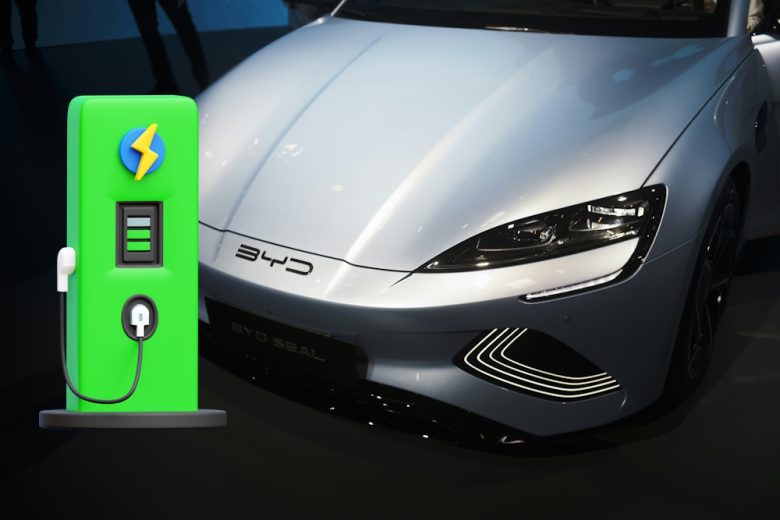


BYD is bringing its ultra-fast Flash Charging network to the UK in 2026, promising charging speeds that rival the time it takes to fill a petrol car.
The technology could remove one of the biggest barriers stopping drivers from switching to electric vehicles: long waits at the charger.
What is BYD flash charging?
Flash Charging is BYD’s high-power charging system, already operating across China with more than 4,000 units installed. Unlike the fastest public rapid chargers in the UK, which top out at around 350kW or 450kW, BYD’s Flash Chargers deliver a staggering 1,500kW of power. That enormous output is what makes the system so quick.
The technology follows BYD’s “Ready in 5, Full in 9, Cold Add 3” approach. In practice, that means the flagship Denza Z9GT can charge from 10 to 70 per cent in just five minutes, and reach 97 per cent in only nine. These speeds put EV charging within touching distance of the few minutes it takes to refuel a conventional car.
How fast is it, really?
The headline figures are impressive even in difficult conditions. BYD claims its chargers will function in sub-zero temperatures, with a 20 to 97 per cent charge possible in roughly 12 minutes even at minus 30 degrees Celsius.
To put that in context, the BMW iX3, one of the fastest-charging EVs on sale today, needs around 21 minutes for a 10 to 80 per cent top-up.
Only vehicles fitted with BYD’s Blade Battery 2.0 can take advantage of Flash Charging. For now, the Denza Z9GT will be the sole model available in the UK that supports it, until the technology filters down into BYD’s mainstream range.
When and where will flash charging launch in the UK?
BYD aims to expand its Chinese network to 20,000 stations by the end of the year. In the UK, executive vice president Stella Li has indicated that between 200 and 300 stations will be installed by the end of 2026.
The first sites are expected to coincide with the Denza Z9GT’s UK arrival, with July 2026 floated as the likely launch month. Initially, the chargers will sit at Denza dealerships before the network spreads more widely.
One of the earliest stations is likely to appear near BYD’s UK headquarters in Uxbridge, West London. Notably, the network won’t carry BYD or Denza branding, in contrast to Tesla’s Superchargers; it will simply be known as the Flash Charging network.
The battery trick behind rapid rollout
BYD’s secret to deploying chargers quickly comes down to batteries. Delivering one megawatt of power normally requires a costly power grid upgrade that can take 12 to 24 months.
Instead, BYD plans to install on-site battery storage that buffers the energy, removing the need for major grid work. The result is faster, cheaper installation. According to the company, a site only needs space for a parking bay large enough to house both the charger and the energy storage unit.
How much will flash charging cost?
Official UK pricing hasn’t been confirmed, but BYD has signalled that its cheaper installation costs will allow it to undercut rivals. The company has suggested a rate of around 60p per kWh, compared with the 89p per kWh charged elsewhere.
Can other brands use flash charging?
At launch, Flash Charging will be exclusive to BYD and its Denza sub-brand. Other manufacturers’ EVs may gain access over time, provided their vehicles can handle the power.
BYD is reportedly exploring ways to stop incompatible cars from occupying Flash Charger bays, with time restrictions floated as one possible solution, though nothing has been finalised.
