


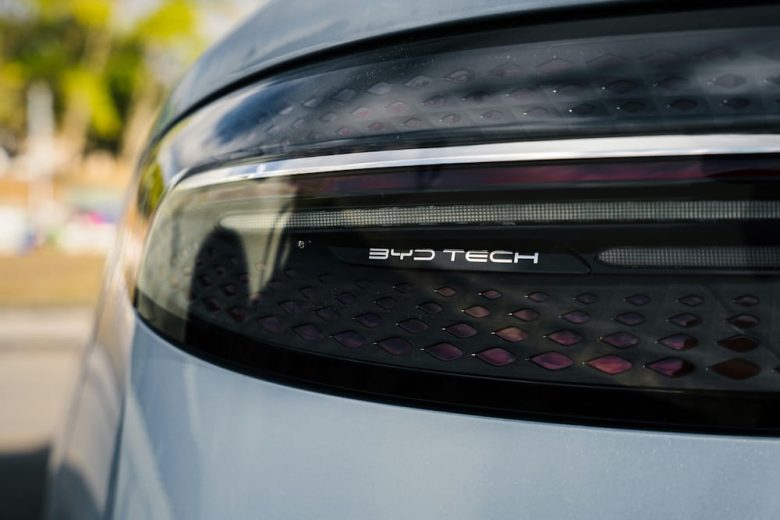


Fast, and not as you know it. We’re talking petrol pump fast.
The race to make electric vehicle charging as quick and painless as filling up with petrol just took a dramatic leap forward.
Chinese automaker BYD recently announced that its latest Flash Chargers can now push an EV battery from 10 to 70 percent in roughly five minutes, delivering over 600 miles of range in the time most people spend waiting for a coffee order. The chargers pump out up to 1,500 kilowatts per session, dwarfing the 350-kW “hyper-fast” chargers that represent the current ceiling in markets like the US and UK, where a full charge still takes closer to 40 minutes.
It’s a milestone that should serve as a wake-up call for automakers and policymakers around the world. While BYD has already built more than 4,000 of these stations across China and plans to add 16,000 more by year’s end, plus 2,000 in Europe, momentum elsewhere is stalling.
Honda recently scrapped three planned electric models in the US. Hyundai has discontinued the standard Ioniq 6 and paused the Kona Electric from its US lineup, while Kia has dropped the Niro EV and delayed several other battery-powered models stateside. Lamborghini, meanwhile, has cancelled its only planned full EV, the Lanzador, pushing any battery-electric model past 2030 globally in favour of plug-in hybrids.
The vertical integration advantage
BYD’s secret weapon is its control over the entire charging ecosystem. The company manufactures its own vehicles, batteries, and chargers, allowing all three components to be engineered in concert.
Its newest Blade battery uses a lithium manganese iron phosphate chemistry that boosts energy density by about 5 percent over last year’s version, while redesigned electrodes, electrolytes, and separators enable the punishing current flow that ultra-fast charging demands.
For now, only one vehicle, the Denza Z9GT, set for its Paris debut next month, can fully exploit the system’s top speeds in Europe. That limitation underscores an important reality: blazing-fast chargers are only half the equation. The cars themselves need software and wiring built to handle that volume of electricity.
Tesla has pursued a similar vertically integrated strategy, but no Western manufacturer has come close to matching BYD’s charging speeds.
Does speed actually matter?
Sceptics will point out that most EV owners with driveways or garages charge overnight at home and only use public fast chargers on longer journeys. For those drivers, the difference between a 20-minute and a five-minute stop may feel close to negligible.
That argument, however, overlooks a crucial audience: the millions of potential buyers who haven’t yet made the switch. Research consistently shows that range anxiety and charging time rank among the top concerns keeping drivers tethered to petrol. A five-minute experience that genuinely mirrors a fuel stop could chip away at that psychological barrier in ways that slower improvements haven’t managed.
There’s also the urban dimension, particularly relevant in the UK, where a significant proportion of households lack off-street parking. For city dwellers who rely entirely on public infrastructure, faster charging isn’t a luxury, it’s a prerequisite.
The UK government’s ZEV mandate, which requires manufacturers to sell rising proportions of zero-emission vehicles each year, only intensifies the need for charging networks that can keep pace with demand.
The infrastructure bottleneck
Even if the technology were exported globally tomorrow, deploying it would be enormously complex. Existing charging stations can’t simply swap in higher-powered units; the entire electrical supply chain, grid capacity, wiring, transformers, would need to be upgraded to move that much current.
BYD is addressing this in China by integrating storage batteries at charging sites to buffer demand on the grid, a practical solution that most markets, including the UK, have barely begun to explore at scale.
The broader picture is hard to ignore. China is accelerating investment in next-generation EV infrastructure while Europe watches and the US retreats. BYD’s five-minute charge is impressive on its own terms, but its real significance may be what it reveals about which nations are serious about the electric future and which are content to watch from the sidelines.
