


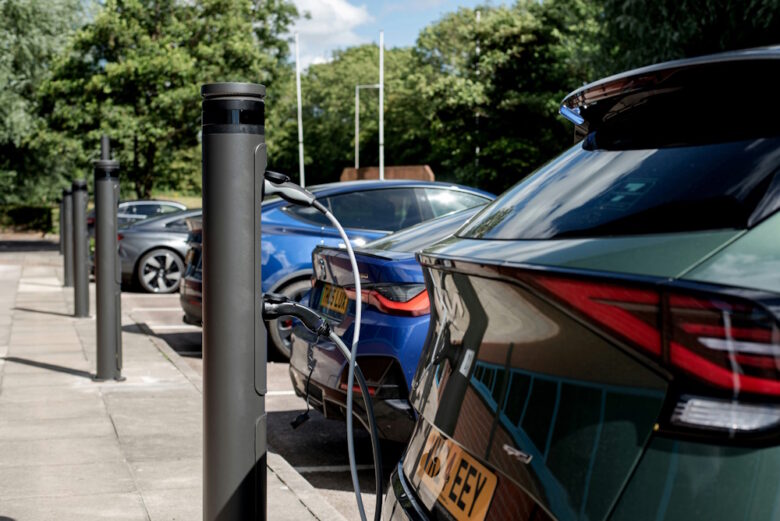


Electric cars feel like a 21st century invention. Open any car magazine and the language is all about disruption, revolution, the future arriving early.
The reality is very different. Electric vehicles have been around for nearly 200 years. And for a brief period in the early 1900s, they were more popular than petrol cars.
Here is how we got from a wooden carriage in 1832 to more than two million electric vehicles on UK roads in 2026.
It started in the 1830s
In 1832, Scottish inventor Robert Anderson built a crude electric carriage. It had no rechargeable battery. Once the power ran out, that was it.
French physicist Gaston Plante changed everything in 1859 when he invented the lead acid battery. For the first time, a vehicle could store and reuse electrical energy.
Thomas Parker, the engineer who electrified the London Underground, built the first production electric car in Wolverhampton in 1884.
Electric cars dominated the early 1900s
At the turn of the century, electric vehicles outsold every other type. One in three cars on American roads was electric.
London had a fleet of electric taxis from 1897, designed by Walter Bersey. New York followed with around 60 of its own.
Ferdinand Porsche built the world’s first hybrid car in 1901, combining a battery with a petrol engine. Thomas Edison was working on better batteries at the same time.
It looked like electricity would win. Then Henry Ford launched the Model T.
Petrol took over
Ford’s Model T was cheap, widely available, and ran on petrol that cost almost nothing. Electric cars could not compete on range or price.
Road networks expanded. Petrol stations appeared on every corner. And electric vehicles, limited to city streets and short journeys, faded away.
Between 1920 and 1935, they all but disappeared.
A quiet few decades
Electric vehicles stayed dormant until the 1960s and 1970s, when oil crises sent petrol prices rocketing in the United States.
Manufacturers tried again. But the vehicles produced were slow, with limited range, and nobody wanted them.
NASA gave electric power a boost in 1971 when the Lunar Rover became the first manned vehicle to drive on the moon. Powered entirely by electricity.
Lithium ion changed everything
Sony and Asahi Kasei commercialised the lithium ion battery in 1991. It was lighter, more energy dense, and lasted longer than anything before it.
California’s clean air regulations in the early 1990s forced manufacturers to develop zero emission vehicles. The technology was finally catching up with the ambition.
In 2004, a small startup called Tesla Motors began work on the Roadster. Delivered to customers in 2008, it was the first highway legal electric car to use lithium ion cells and travel more than 200 miles on a single charge.
The modern era begins
Nissan launched the Leaf in 2010 as the first mass market pure electric family car from a major manufacturer. It proved that everyday drivers could live with an electric vehicle.
Global EV sales hit one million in September 2015. Norway reached 100,000 registrations in the same year.
Tesla produced its millionth electric car in March 2020. Combined global sales of electric cars and vans passed 10 million units by the end of that year.
The UK accelerates
The UK government announced in May 2021 that over 500,000 ultra low emission vehicles were on British roads. A ban on new petrol and diesel car sales from 2030 was already confirmed.
Growth since then has been rapid. It took around 14 years to reach one million battery electric vehicles on UK roads. The second million took roughly two years.
Department for Transport figures show 2,012,000 zero emission vehicles were licensed in the UK by December 2025. A 31.2% increase on the year before.
Where we are in 2026
Electric vehicles now account for 22.4% of all new car sales in the UK. Up from 20.7% in 2025 and climbing every month.
In May 2026, 43,931 new electric cars were sold in one month alone. A 34% year on year increase. Petrol car sales fell 14% in the same period.
Over a rolling 12 month period to May 2026, more new battery electric vehicles were sold than new petrol cars for the first time ever. 516,490 EVs compared to 504,010 petrol cars.
The Electric Car Grant now offers up to £3,750 off a new EV priced below £50,000. And from spring 2027, the government is investing £100 million to cut public charging costs for drivers who rely on street chargers.
Charging has evolved too
Early electric cars had no charging infrastructure at all. You plugged into whatever was available and hoped for the best.
Today, the UK has over 124,000 public charge points. Type 2 is the standard connector, used by Tesla, BMW, MG, Kia, Hyundai, BYD, and almost every other manufacturer.
Home charging on a 7kW wallbox adds around 25 miles of range per hour. Most EV owners plug in overnight and wake up to a full battery, spending a fraction of what a petrol fill up would cost.
Public rapid chargers can add 200 miles of range in under an hour. Networks like InstaVolt now operate over 1,200 locations across the UK.
From curiosity to mainstream
Electric vehicles have gone from a wooden carriage in 1832 to two million cars on UK roads. The technology Robert Anderson experimented with nearly 200 years ago now powers family hatchbacks, SUVs, and commercial vans.
Batteries last longer than predicted. Charging infrastructure is growing every month. And for the first time in UK history, more people are choosing electric over petrol.
If you are charging at home or on the road, a certified Type 2 cable is all you need to keep moving.
Sources
RAC, ‘Landmark moment as number of EVs on UK roads surpasses two million’, April 2026
Carbon Brief, ‘UK sales of electric vehicles just overtook petrol cars for the first time’, June 2026
Energy Saving Trust, ‘A brief history of the electric car’, August 2026
GOV.UK, ‘Cutting electric vehicle charging costs’, October 2026
Department for Transport, Vehicle licensing statistics, December 2025
