


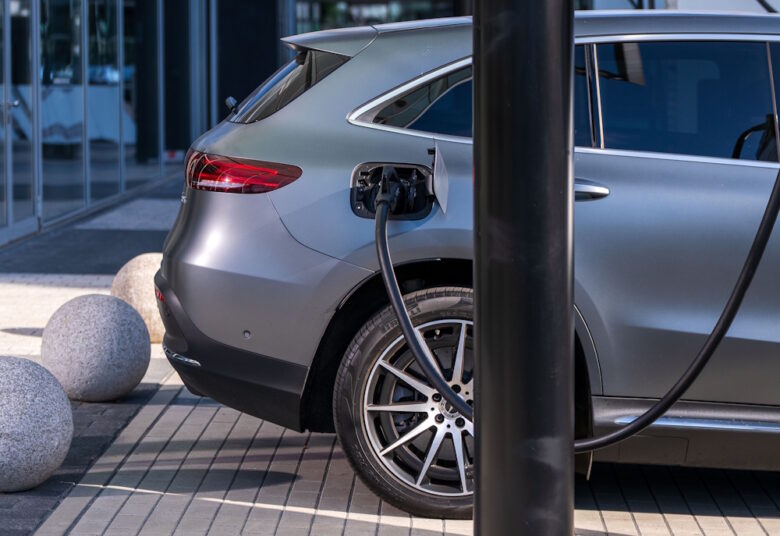
Usually, very little routine maintenance is required for the traction motor itself. That does not make an electric car maintenance-free: the wider drive system and the rest of the vehicle still have checks and service requirements.
Electric cars remove several familiar combustion-engine service items. A battery-electric vehicle has no engine oil to change, no spark plugs and no exhaust-emissions system to service. Its electric powertrain also has fewer moving parts and fluids than a comparable petrol or diesel powertrain.
The important distinction is between needing less routine maintenance and needing none at all. The electric motor may not appear as a separate annual service item, but the car still contains mechanical, electrical and cooling-system components that must be looked after according to the manufacturer’s instructions.
The short answer
- The traction motor itself normally needs little routine owner maintenance.
- The complete drive system can include more than the motor alone.
- Lubricant and coolant requirements vary by vehicle and drive-unit design.
- Warnings, new noises or leaks need diagnosis rather than guesswork.
The motor is not always the whole drive unit
In everyday conversation, people often use ‘motor’ and ‘drive unit’ as if they mean the same thing. They can be different. An integrated electric axle, or e-axle, may combine the motor, power electronics and transmission in a single assembly. Other vehicles arrange these parts differently, and some cars have a drive unit at each axle.
This matters because a problem described as a motor issue may actually involve another part of the assembly. It also explains why maintenance and repair advice cannot safely be copied from one model to another.
What maintenance can the drive system need?
There is no single EV motor service interval that applies to every electric car. The correct source is the owner’s handbook or maintenance schedule for the exact model, model year and market. Depending on the vehicle, relevant items may include:
- Reduction-gear or drive-unit lubricant checks or replacement, if the manufacturer specifies them.
- Cooling-system inspections or coolant replacement where these appear in the vehicle’s schedule.
- Checks of driveshafts, boots and nearby components as part of routine vehicle servicing.
Some manufacturers specify inspections or fluid changes only under particular conditions, while others do not list a routine drive-unit fluid change. A generic mileage figure could therefore cause unnecessary work on one vehicle or missed maintenance on another. Use the specified fluid and procedure whenever service is required.
What about bearings, seals and gaskets?
Depending on its design, a drive unit can contain bearings for rotating components and seals or gaskets around lubricated or cooled sections. These are internal parts, not normal owner service items. They should not be replaced simply because the car has reached a particular age or mileage unless the manufacturer says otherwise or a fault has been properly diagnosed.
Once a component-level fault has been confirmed, replacement bearings, seals, gaskets and repair kits may be available for some EV drive units. Smoothbev is one supplier of these parts. Compatibility must be verified against the vehicle and drive unit, and the existence of a kit is not evidence that a fault has been correctly diagnosed or that a rebuild is the appropriate repair.
What still needs regular attention on an EV?
Even when the traction motor has no scheduled service, the rest of the car still does. Tyres, brakes, suspension, steering, wipers, cabin filters and brake fluid remain part of normal ownership. The relevant list and intervals are set by the manufacturer.
Regenerative braking can reduce use of the friction brakes, but it does not remove the need to inspect them. In places where winter road salt is used, some manufacturers give instructions for brake cleaning or lubrication.
When should a motor or drive unit be inspected?
Arrange an inspection if the vehicle shows a persistent powertrain warning, develops a new repeatable noise or vibration, or has a visible fluid leak. Follow any instruction shown by the car or given in the handbook, particularly if the vehicle limits power or advises you to stop.
None of these signs proves that the motor itself has failed. Tyres, wheel bearings, driveshafts, brakes, suspension and other electrical or mechanical components can produce overlapping symptoms. Fault codes and a road test may help, but they must be interpreted for the vehicle.
Can owners maintain the motor themselves?
Owners can carry out basic checks and any do-it-yourself tasks explicitly covered by the manufacturer’s instructions. Opening a drive unit or working on high-voltage components is a different matter. Electric and hybrid vehicles can require specialist knowledge, tools and training, and the level of competence must match the work being carried out.
For diagnosis or internal drive-unit work, use a workshop with appropriate EV competence and access to vehicle-repair information. The technician should confirm the fault and the exact unit before any parts are ordered.
So, do electric car motors need maintenance?
Usually, the traction motor itself needs very little scheduled maintenance. The wider answer is more nuanced: an EV still has a drive unit, cooling system, brakes, tyres and other components that may require inspection or servicing.
Treat the manufacturer’s schedule as the authority for routine maintenance. If a warning, noise or leak appears, treat it as a reason for proper diagnosis, not as proof that the motor needs replacement or rebuilding.
