


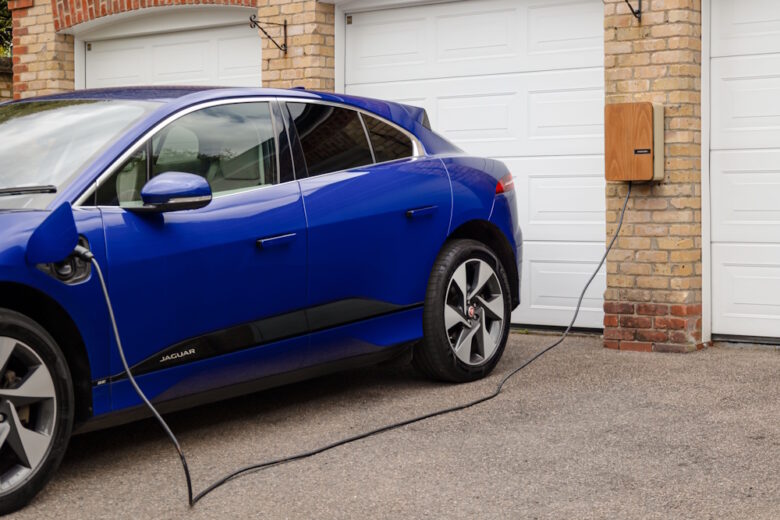


If you’ve just bought an electric car, one of the first decisions you’ll face is how to charge it at home. The two options are a smart charger (a professionally installed wallbox) or a portable charger (a cable that plugs into a domestic socket).
They both charge your car. But the way they do it, the speed they deliver, and the safety features they offer are very different.
Here’s a clear breakdown of what each one is, how they work, and which one makes sense for your situation.
What is a smart charger?
A smart charger is a dedicated wallbox that’s hardwired into your home’s electrical supply by a qualified electrician. It sits on a wall near where you park and connects to your car with a Type 2 cable.
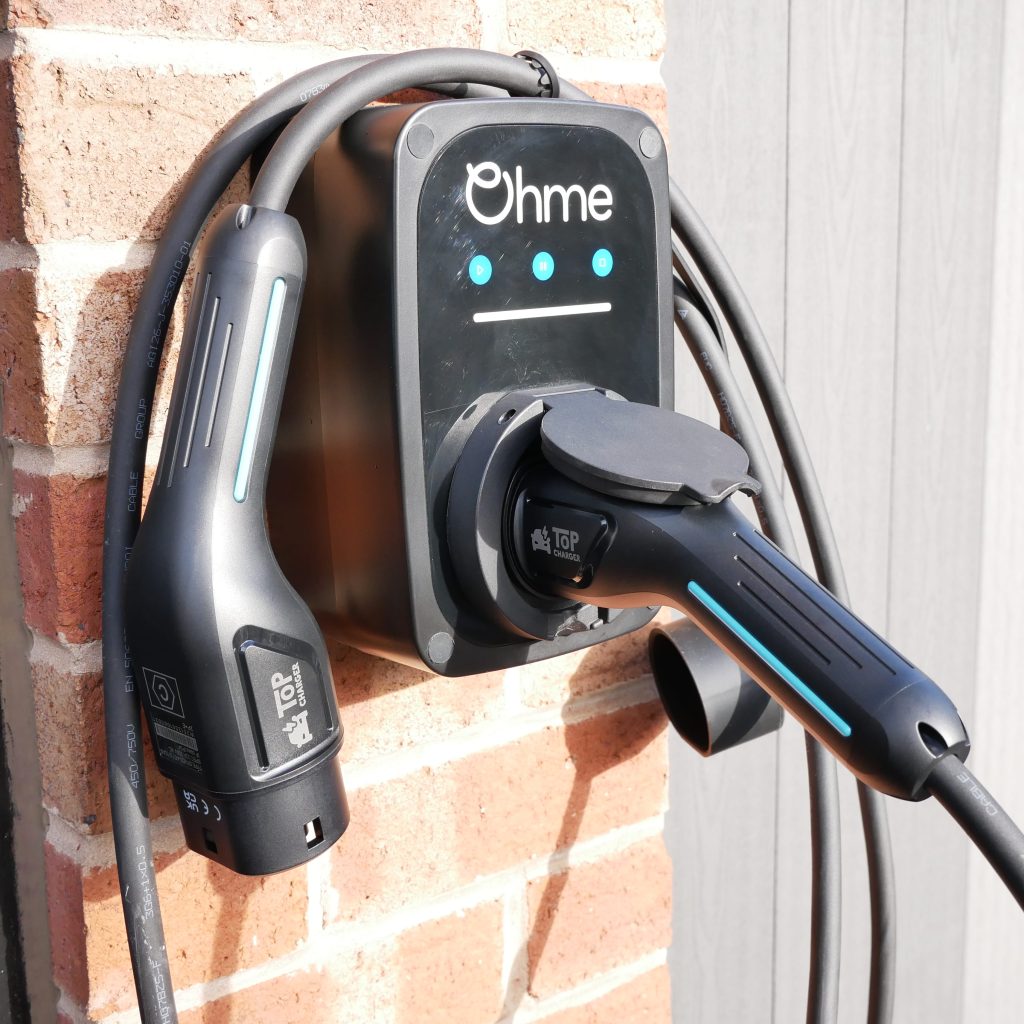
It runs on its own dedicated circuit, protected by its own fuse and RCD at the consumer unit. It’s completely independent of your home’s ring main.
In the EV industry, charging from a wallbox is known as Mode 3 charging. The charger handles all communication with your vehicle, manages the current, and includes built-in safety protections.
Since 30 June 2022, all new home and workplace chargers sold in Great Britain must be smart chargers under the Electric Vehicles (Smart Charge Points) Regulations 2021.
Smart functionality means the charger can schedule charging sessions, respond to off-peak tariff windows, apply randomised start delays to ease grid demand, and communicate securely over Wi-Fi or mobile data.
What is a portable charger?
A portable charger is a cable with a standard UK 3-pin plug at one end and a Type 2 connector at the other. In between sits a control box known as an ICCB (In-Cable Control Box) or IC-CPD (In-Cable Control and Protection Device).
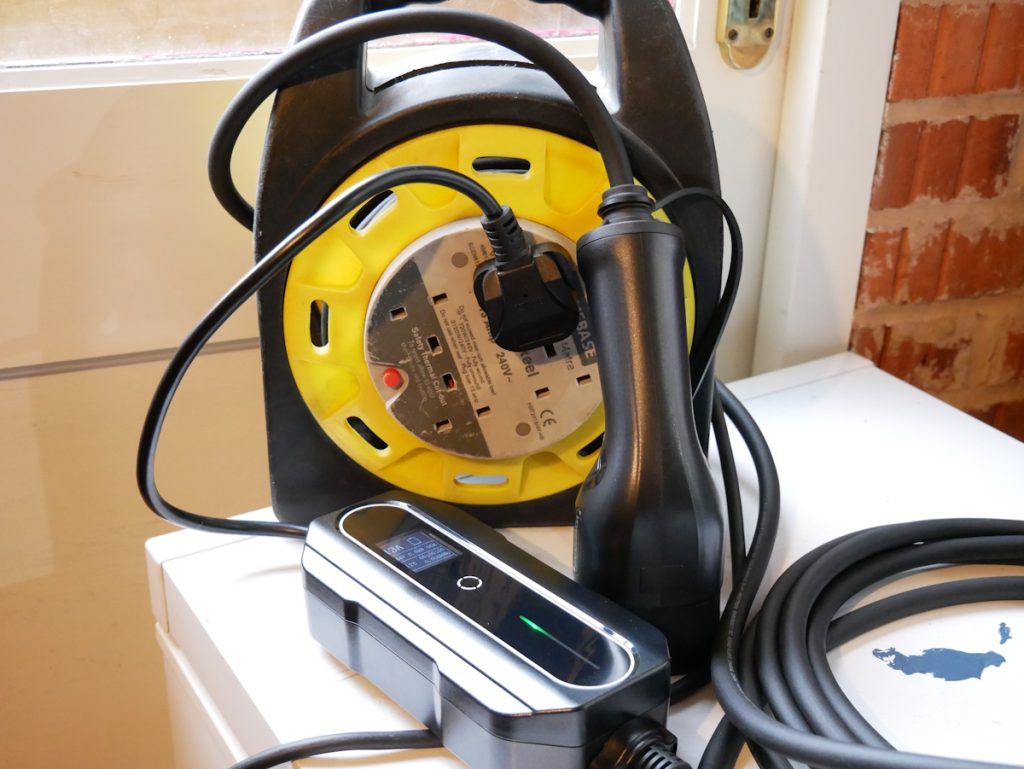
You plug it into a regular domestic socket, connect the other end to your car, and it charges. No installation needed.
Charging from a domestic socket is known as Mode 2 charging. The ICCB acts as the safety layer, handling current limitation, RCD protection, and communication with the vehicle.
Some EVs ship with a portable charger included. Others don’t, and you buy one separately. They’re designed to be carried in the boot and used wherever you can find a suitable socket.
How they compare at a glance
| Smart charger (Mode 3) | Portable charger (Mode 2) | |
| Charge speed | Up to 7.4kW (single-phase) | Up to 2.3kW (13A 3-pin socket) |
| Range added per hour | ~28 to 30 miles | ~8 miles |
| Full charge time (50kWh battery) | ~7 hours | ~21 hours |
| Circuit type | Dedicated circuit, hardwired | Existing ring main socket |
| Installation required | Yes, by qualified electrician | No |
| RCD protection | Built in, plus dedicated RCD at consumer unit | Built into ICCB control box |
| Smart features | Scheduling, load balancing, app control, tariff integration | Limited or none |
| Typical cost (installed) | £600 to £1,200 | £150 to £400 (no installation) |
| Portable | No, wall-mounted | Yes, travels with you |
Safety differences
A smart charger runs on its own dedicated circuit. Your electrician installs a separate fuse and RCD at the consumer unit, sized and rated for the continuous load of EV charging.
That means if anything goes wrong with the charger or the cable, the dedicated RCD trips without affecting anything else in your home. Your lights, fridge, and alarm stay on.
The charger itself includes additional protections: earth fault monitoring, overcurrent detection, and in most cases, load balancing to prevent the total demand on your home supply from exceeding its limits.
A portable charger relies on your existing ring main. The socket you plug into was designed for kettles, lamps, and vacuum cleaners, not for drawing 2.3kW continuously for eight or more hours.
The ICCB control box provides its own RCD and overcurrent protection. A quality portable charger built to IEC 62752 will include 30mA AC and 6mA DC residual current detection, temperature monitoring in both the plug and the control box, and control pilot signalling.
However, the underlying socket and wiring were not installed with EV charging in mind. Older sockets, loose connections, or circuits shared with other high-draw appliances can cause heat buildup over extended charging sessions.
A portable charger is not unsafe if used correctly on a sound electrical installation. But it has fewer layers of protection than a dedicated smart charger on its own circuit.
Charging speed
A smart charger on a single-phase supply delivers up to 7.4kW. At that rate, you’re adding around 28 to 30 miles of range per hour.
Most EVs will charge from 10% to 80% in five to seven hours on a smart charger. Plug in at 7pm and you’re fully charged before midnight.
A portable charger on a standard 13A socket delivers around 2.3kW. That’s roughly 8 miles of range per hour.
The same 10% to 80% charge takes around 18 to 21 hours. If you arrive home with a low battery, you may not have a full charge by the time you leave the next morning.
For drivers covering under 30 miles a day, a portable charger can keep up. Plug in overnight and you’ll gain enough range. For anyone driving further, the maths stops working fairly quickly.
Smart features and cost savings
One of the biggest advantages of a smart charger is scheduling. You can set it to start charging automatically when off-peak electricity rates begin.
On a tariff like Intelligent Octopus Go, off-peak electricity drops to around 7p per kWh between 23:30 and 05:30. A full 50kWh charge at that rate costs roughly £3.50. On a standard variable tariff at 26p per kWh, the same charge costs around £13.
Over a year of daily charging, the savings from a smart tariff can offset a significant portion of the charger’s installation cost.
Smart chargers also support load balancing. If you’re running the oven, shower, and washing machine at the same time, the charger can automatically reduce its draw to prevent your main fuse from tripping.
Most portable chargers have no scheduling or load balancing. You plug in and it charges at a fixed rate. There’s no integration with your energy tariff and no way to control the timing without physically unplugging.
What UK law says
Since 30 June 2022, the Electric Vehicles (Smart Charge Points) Regulations 2021 require all new home and workplace chargers sold in Great Britain to include smart functionality.
Chargers must come pre-configured with a charging schedule, apply a randomised start delay of up to 10 minutes to prevent grid spikes, and communicate securely over a network connection.
From 30 December 2022, additional security requirements came into force, including tamper detection and secure software update mechanisms.
Portable chargers are not covered by these regulations. They are classified as Mode 2 equipment and fall outside the scope of the Smart Charge Points Regulations.
That doesn’t mean portable chargers are illegal. It means they aren’t subject to the same regulatory framework that governs professionally installed smart chargers.
Installation and cost
A smart charger requires professional installation. The electrician will run a dedicated cable from your consumer unit to the charger location, install a dedicated fuse and RCD, and test the installation.
Expect to pay between £600 and £1,200 total, depending on the charger model and the complexity of the installation. From April 2026, the Government’s EV chargepoint grant provides up to £500 per socket for eligible applicants.
A portable charger requires no installation. You buy it, plug it in, and charge. Prices range from £150 to £400 depending on the brand and features.
The lower upfront cost is the main appeal. For renters, people in flats, or drivers who can’t install a wallbox for practical reasons, a portable charger may be the only option.
When a portable charger makes sense
You rent your home and can’t install a wallbox.
You live in a flat without dedicated parking or a suitable wall for mounting.
You need a backup option for overnight stays, holidays, or visiting family.
You drive a plug-in hybrid with a small battery that tops up easily overnight on 2.3kW.
You cover very low daily mileage and don’t need a fast turnaround on charging.
When a smart charger is the better choice
You own or have long-term tenancy of a property with off-street parking.
You drive a fully electric car and need reliable overnight charging.
You want to take advantage of off-peak electricity tariffs to reduce your running costs.
You want the safety assurance of a dedicated circuit with its own RCD and earth fault monitoring.
You plan to keep the car for several years and want a charging setup that pays for itself over time.
Can you use both?
Yes, and many EV drivers do. A smart charger handles your daily charging at home. A portable charger lives in the boot for occasional use at other locations.
If your wallbox is untethered (socket-only, no built-in cable), you’ll also need a Type 2 to Type 2 cable for Mode 3 charging at home and at public AC chargers. That’s a separate item from a portable charger.
Having both gives you flexibility. One for daily use, one for everything else.
The bottom line
A smart charger is faster, safer by design, smarter with your energy tariff, and required by UK law to include safety and grid-management features. It costs more upfront but saves money over time.
A portable charger is convenient, requires no installation, and works anywhere you can find a suitable socket. It’s slower and relies on wiring that wasn’t designed for sustained high-current loads, but it’s a valid option for the right situation.
For most EV owners with off-street parking, a smart charger is the right long-term investment. A portable charger makes a useful backup alongside it.
