


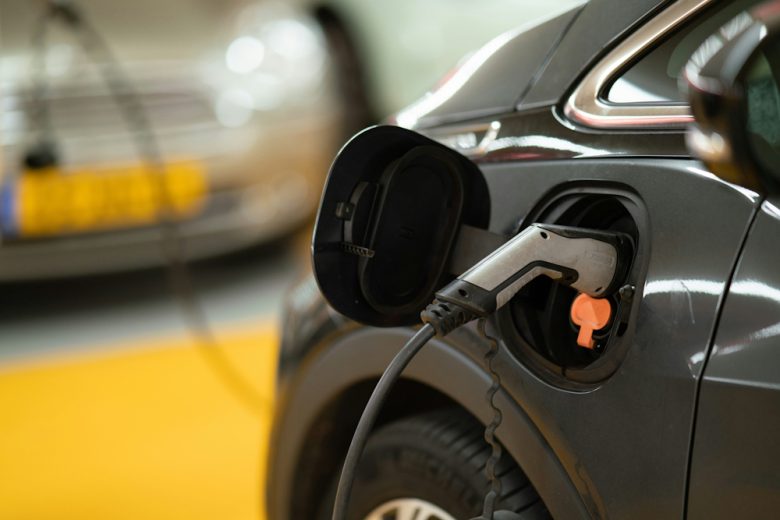
The UK market is no longer in the awkward half-step it was a few years ago. Official data shows 86,021 public EV charging devices in the UK as of 1 October 2025, with 17,356 rated at 50kW or above, while Zapmap’s March 2026 platform data puts the UK at 119,080 chargers across 46,107 locations, including 27,372 rapid or ultra-rapid chargers. I
t tells us the choice between an electric vehicle and a plug-in hybrid is no longer just about range anxiety, but also about how you work, how often you travel, and how much of your driving life happens inside the charging network rather than outside it.
For work, the pure EV has the cleaner logic
If the car is mainly for commuting, client visits, depot runs, or company-car use, a BEV is usually the better fit. The reason is beyond cleaner tailpipes. It is also the way the numbers now line up in the UK.
HMRC’s advisory electric rates from 1 March 2026 are 7 pence per mile for home charging and 15 pence per mile for public charging, while hybrid cars are treated as petrol or diesel cars for advisory fuel rates. That gives electric drivers a simpler reimbursement structure and gives fleet teams a clearer cost base than a plug-in hybrid, which can look cheap in theory and messy in practice.
A full EV rewards repeatable mileage and predictable parking. It also suits drivers who can plan charging around a home wallbox, office charger, or regular public stop. Once the car is being used as a tool rather than a toy, fewer moving parts usually means fewer arguments. The most convincing work vehicle is the one that asks the least from the driver on a normal Tuesday.
A plug-in hybrid still helps when your work is irregular
That does not make PHEVs pointless. They still make sense for drivers whose routes are messy, cover rural ground, or cannot rely on charging every night. That fallback can be useful for people whose schedules change at short notice, or for jobs that send them far from reliable charging without warning. The crucial distinction is that this value comes from infrequent uncertainty, not from everyday efficiency.
The problem is that a PHEV only earns its keep when it is actually plugged in often enough to spend meaningful time in electric mode. That is where the real-world data becomes uncomfortable. Transport & Environment’s 2025 report says PHEVs averaged 135 gCO₂/km in real-world driving, far above regulatory expectations, and that the true emissions gap versus petrol and diesel cars was only 19 per cent, not the much larger WLTP impression. The same report says the official system had assumed much lower emissions than drivers were actually producing.
That means a PHEV is not automatically a cleaner car, but a conditional cleaner car. When the battery is charged regularly, it can behave well. When it is not, it starts acting like a heavy petrol vehicle with extra hardware attached. That distinction is the whole game, and it is where buyers often fool themselves.
Adventure is where the answer gets more interesting
For adventure driving, the instinctive answer is often the PHEV. The reason is that the petrol backup feels comforting on long routes, in poor weather, or when the trip is split between motorway miles and remote roads. That instinct is not wrong, but it is incomplete. The UK charging picture has improved enough that long-distance EV travel is much less fragile than it used to be.
As revealed earlier, the UK had 27,372 rapid or ultra-rapid chargers across 6,785 locations by March 2026, and that 3,425 ultra-rapid chargers were added in 2025 alone, which is a 40 per cent year-on-year increase. That changes the mood of a road trip since route planning now has more redundancy than it once did.
This is also where vehicle packaging and drivetrain need to stay separate in your head. For instance, a Ford Ranger truck cap or a camper shell Ford Ranger can make the pickup far more practical for gear, weather protection, and sleeping arrangements, but it does not change the energy question underneath.
Storage helps with adventure, but the powertrain decides how that adventure is refuelled. Once you see those as two different problems, the choice becomes clearer.
For a driver who likes long weekends away, the EV now has a stronger case than many people expect, provided the route is planned with chargers in mind. For someone who regularly disappears into areas where chargers are sparse or where timing is unpredictable, the PHEV still earns respect. The difference is that the EV is now the option that scales better with the growing network, while the PHEV is the option that cushions the gaps.
The real cost story is not the one in the brochure
The brochure version of this debate usually pretends that PHEVs are the elegant middle ground, but the live data is less flattering. In the UK, the official charging network is large enough to support a much broader shift to EVs, and the growth trend keeps pushing in that direction.
According to Government FAQ material, the estimated public charging demand range for 2030, based on its 2024 update, sits between 250,000 and 550,000 chargers, which shows the policy direction is still toward scale rather than hesitation.
You should know that the value of a PHEV depends on how often a driver can actually use the plug. If the answer is often, the car can still be sensible. If the answer is rarely, then the extra complexity starts working against you.
The cost advantage disappears, the emissions gap shrinks less than expected, and the car ends up living in the worst of both worlds. A BEV does not have that split personality. It may demand better planning, but when it is used as intended, its economics are much easier to defend.
Electric vs PHEVs – Which one should win?
For most UK drivers who need a car for work, the electric vehicle is the stronger answer. It is better aligned with charging availability, cleaner in day-to-day use, and easier to manage for company-car and mileage purposes. For adventure, a PHEV still has a narrow but real role when routes are long, charging access is patchy, and backup fuel genuinely matters. The mistake is to treat the PHEV as a universal compromise. It is not. It is a specific tool for a specific kind of driver.
My honest verdict is simple. If your life is mostly work, routine, and predictable charging, go electric. If your life is irregular, remote, and hard to schedule around chargers, a PHEV still has a case. But the balance of evidence in the UK is moving away from best of both worlds and towards best used for the right world.
