


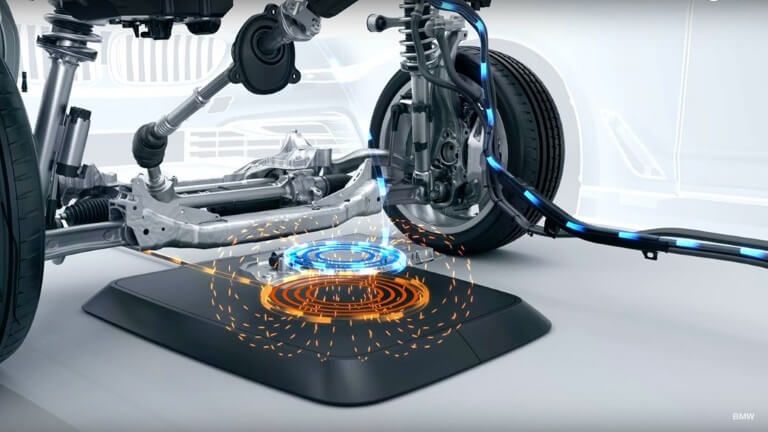


There’s exciting news over the pond this week as a wireless charging road enters construction.
We’ve written about wireless EV chargers before, where an inductive plate built into the ground charges stationary vehicles. But what if it charged moving vehicles?
That’s what Detroit will trial over the next year, with a $2 million investment in a new 1-mile road that charges electric vehicles as they drive.
The road will have large inductive charging plates built into it, which are fed by coils built into the pavement. The coils send magnetic frequencies to the charging pads, charging electric vehicles as they drive over the road.
The technology is not a trial towards commercialisation, but a trial for the viability of the technology, which has several challenges.
The biggest challenge is cost. Ripping up the earth for new roads and road modernisation is expensive on its own without wireless charging infrastructure. It could be that the benefits of wireless charging roads do not outweigh the costs.
Other key challenges include the placement of the electromagnetic field and the radius of the field. Like a smartphone, an electric car with an induction receiver needs to be perfectly placed over the field to charge correctly.
Additionally, there’s the issue of efficiency. While plugging in is around 96% efficient, wireless charging is only around 90% efficient with current technology. It means slower charge speeds, potentially at 2.6kW (the same as a 3-pin plug).
It’ll be interesting to see how Detroit gets on with the project.
In the UK, there is also a wireless EV charging trial underway, but this is for parked vehicles. Charging moving vehicles wirelessly is another kettle of fish entirely.
Source: CBS.
